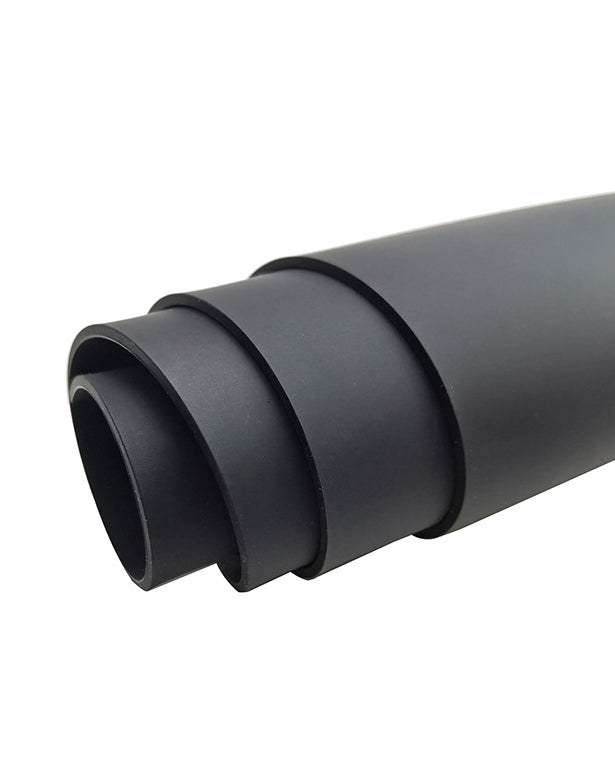


The fundamental differences between non-pneumatic elastic support tires and traditional pneumatic inner tubes: The technology of non-pneumatic elastic support tires replaces traditional pneumatic inner tubes with elastic materials or special structures. This new type of tire technology realizes the functions of vehicle support and shock absorption. Let's systematically analyze the technology, materials, structure, and operating environment from various aspects.
-
Technical Principle: Elastic Support Mechanism
Material elasticity: High-strength elastomeric materials such as PU (Polyurethane) and TPU (Thermoplastic Polyurethane) are used, which absorb impacts through reversible deformation of molecular segments. Some of these materials have a tensile strength of over 30MPa and a rebound rate exceeding 85%, enabling them to withstand loads of more than 3 tons.
Structural elasticity: Support is provided through energy storage via deformation of various mechanical structures, such as honeycomb designs, spoke designs, and 3D grid designs. -
Breakthroughs in Materials: Bio-based Materials
The Vision concept tire uses bio-based materials such as natural rubber and bamboo fibers, combined with 3D printing technology to achieve biodegradability, with bio-based materials accounting for over 70% of the total. Goodyear's reCharge tire adopts biodegradable tread rubber and a bionic spider silk fiber framework, allowing the tread to be replaced individually to reduce waste.
High-performance polymers: The iFlex tire uses UNI-Material polyurethane, which is twice as wear-resistant as traditional rubber, recyclable, and compliant with the EU REACH regulations. -
3D Printing Technology
TPU material 3D-printed tires based on FDM (Fused Deposition Modeling) technology can achieve 50% of simulated stiffness at a printing temperature of 210°C. The material is recyclable and reusable, addressing the issue of waste pollution from traditional tires. -
Types and Data of Support Structures
Spoke-type: Spoke-type tires adopt a three-layer structure (hub-spoke-tread) with spokes featuring an I-shaped cross-section. By adjusting the number of spokes (8-16) and their angle (30°-60°), the vertical stiffness of the tire reaches 20N/mm at a speed of 15km/h, close to the level of traditional pneumatic tires.
Honeycomb-type: The 3D cell structure of the iFlex tire has cells with a diameter of 5-10mm and a wall thickness of 0.5-1mm. Different load requirements are matched by varying the honeycomb density (50-200cells/cm³).
Composite-type: Nissan's patented technology designs multi-layer elastic spokes between the tread and hub. The outer spokes have higher hardness (Shore A 80) to provide support, while the inner spokes are softer (Shore A 60) to absorb impacts, increasing the lateral stiffness by 30% during steering. -
Dynamic Performance Optimization
Multi-objective simulation: Jihua Laboratory has established a dynamic model incorporating structural, material, and process parameters. Through ANSYS simulation optimization, the tire's rolling resistance coefficient is reduced to 0.018 at 60km/h, approaching the level of traditional tires.
Bionic design: The support framework of the reCharge tire is inspired by the hierarchical structure of spider silk, with a tear resistance of 80kN/m—four times that of traditional rubber—while maintaining an elongation at break of 300%. -
Future Development Trends
Non-pneumatic elastic support tire technology is moving from laboratory to industrialization, with its core breakthrough lying in the synergistic optimization of material performance and structural design. As technologies such as 3D printing and bio-based materials mature, this technology is expected to be applied on a large scale in fields such as new energy vehicles, special equipment, and space exploration, driving the global tire industry toward green and intelligent transformation. Manufacturer Pexxon Rubber has extensive experience in the research and development of non-pneumatic tire materials.