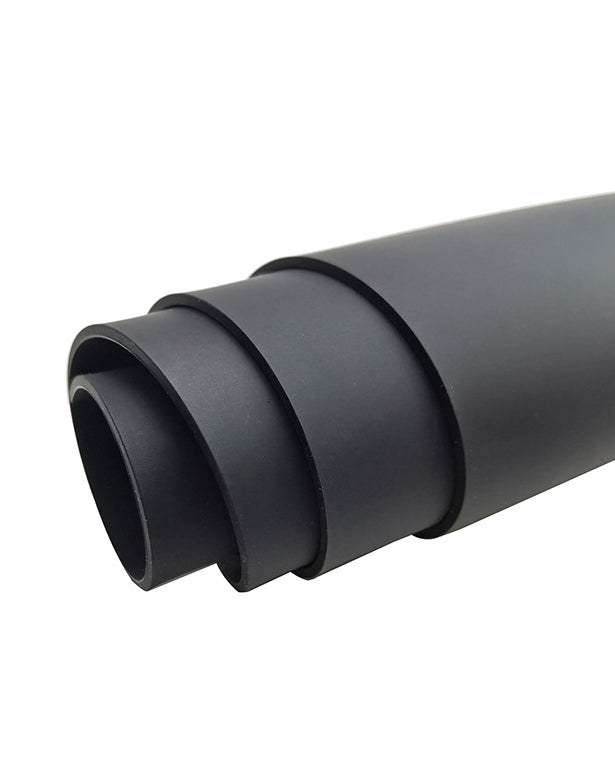


With its excellent weather resistance, aging resistance and corrosion resistance, EPDM gaskets have become the preferred material for scenarios such as sealing, pipeline connection and equipment protection in the industrial field. However, insufficient oil resistance is an inherent shortcoming of EPDM gaskets, which limits their application in oil-medium working conditions including automobile manufacturing, chemical equipment and mechanical hydraulics. In fact, the oil resistance of EPDM gaskets is not an absolute weakness. Through scientific working condition matching, formula modification and structural optimization, stable sealing of EPDM in oil-medium environments can be fully achieved. This paper will deeply analyze the implementation path and actionable solutions for the oil resistance of EPDM gaskets from four aspects: working condition characteristics, material properties, modification technologies and application cases.
1、Root Cause and Improvement Potential of Insufficient Oil Resistance of EPDM Gaskets
Chemical Root Cause of Poor Oil Resistance: EPDM is a synthetic rubber copolymerized from ethylene, propylene and non-conjugated diene monomers. Its chemical structure is characterized by two key features: 1. The molecular chain is mainly composed of non-polar saturated hydrocarbons and lacks polar groups; 2. The carbon-carbon single bond structure ensures high stability and excellent aging resistance. While this structure underpins EPDM’s performance advantages, it also accounts for its insufficient oil resistance. When non-polar EPDM molecules come into contact with weakly polar oil media, oil molecules tend to penetrate into the rubber matrix, causing the gasket to swell, lose hardness and tensile strength, and eventually fail to maintain its sealing performance.
2、Performance of EPDM Gaskets in Oil Media
|
Oil Medium Type |
Test Condition |
Swelling Rate (24h) |
Hardness Change (Shore A) |
Tensile Strength Retention Rate |
|
Mineral Oil |
100℃ |
15%–25% |
-8 to -12 |
60%–75% |
|
Synthetic Hydraulic Oil |
80℃ |
10%–18% |
-5 to -10 |
70%–80% |
|
Animal and Vegetable Oil |
60℃ |
8%–12% |
-3 to -5 |
85%–90% |
As can be seen from the above data, EPDM gaskets exhibit poor oil resistance in high-temperature, strong-polarity oil media, yet they still maintain a certain tolerance in low-temperature, weak-polarity oil environments. This provides a fundamental basis for working condition matching.
3、Core Logic for Breaking Through Oil Resistance Limitations
The improvement of oil resistance in EPDM gaskets is not an unattainable goal, but rather requires performance balancing through working condition adaptation and modification optimization:
Working Condition Adaptation: Avoid extreme conditions such as high temperatures and strong-polarity oils to which EPDM is not resistant, and design application scenarios within its tolerance range.
Material Modification: Adjust the chemical structure of EPDM via formula blending, filling and cross-linking modification, so as to enhance its oil penetration resistance.
Structural Optimization: Reduce the contact area and contact time between the oil medium and rubber through the design of gasket shape and sealing mode.
These three factors do not exist independently; instead, they need to be combined with each other to achieve the goal of stable sealing under the target working conditions.+

4、Working Condition Adaptation: A Prerequisite for Oil Resistance
Matching Principles for Oil Medium Types
Different oil media vary significantly in polarity, viscosity and chemical activity, which directly affect the resistance performance of EPDM gaskets:
Weak-polarity medium environments: EPDM demonstrates relatively good resistance.
Long-term sealing can be achieved via basic formula adjustment under the working conditions of normal temperature (≤60℃) and low pressure.
Medium-polarity medium environments: Containing ester and ether additives, these media exhibit strong permeability to EPDM, requiring the use of modified EPDM.
Strong-polarity medium environments: Polar groups tend to interact with EPDM molecules, leading to severe swelling. Pure EPDM gaskets are not suitable for direct use in such environments; composite structures or alternative materials should be adopted instead.
Influences of Temperature and PressureTemperature and pressure are key factors that intensify the erosion of EPDM gaskets by oil media, necessitating an integrated matching model of temperature, pressure and oil resistance:
Temperature impact: For every 10℃ increase in temperature, the penetration rate of oil molecules rises by 1.5 to 2 times, and the swelling rate of EPDM increases by 8%–12%. Therefore, in oil media, the recommended maximum service temperatures for EPDM gaskets are as follows: ≤60℃ for pure EPDM and ≤100℃ for modified EPDM.
Pressure impact: Increased pressure accelerates the penetration of oil media into the interior of EPDM. When the pressure exceeds 1.6 MPa, the sealing lifespan of pure EPDM gaskets is shortened by more than 50%. For medium-to-high pressure working conditions (1.6–4.0 MPa), it is recommended to adopt composite structures consisting of modified EPDM and reinforced frameworks to reduce oil penetration caused by gasket deformation.
5、Modification Technology: The Core Path to Enhanced Oil Resistance
Performance Advantages of Blending Modification
Blending modification is the most mature and widely applied technology for improving the oil resistance of EPDM. Its core principle lies in blending EPDM with rubber materials that exhibit excellent oil resistance, thereby achieving a balance between EPDM’s weather resistance and the oil resistance of the latter component:
· EPDM/NBR Blending System: NBR contains polar cyano groups and boasts outstanding oil resistance. For the blending of EPDM and NBR, the recommended ratio is EPDM:NBR = 70:30 to 80:20. This blend system can reduce the swelling rate by 40%–50% while retaining over 80% of EPDM’s inherent weather resistance. It is suitable for medium-to-low temperature working conditions (≤80℃) involving mineral oils and synthetic oils.
· EPDM/HNBR Blending System: HNBR outperforms NBR in both oil resistance and high-temperature resistance. After blending with EPDM, the maximum service temperature of the composite can be increased to 120℃, with the swelling rate controlled within 5%. This blend is ideal for high-end applications such as automotive gearboxes and hydraulic systems. However, its cost is 30%–50% higher than that of pure EPDM.
6、Filler Modification: Enhancing Oil Penetration Resistance
By incorporating oil-resistant fillers into the EPDM formulation, a physical barrier layer is formed to reduce oil molecule penetration. Common filler types and their respective effects are as follows:
· Carbon Black: Select fine-particle, high-structure carbon black grades such as N330 and N550. With an addition level of 20–40 phr, the swelling rate can be reduced by 15%–20%, while simultaneously improving the tensile strength and wear resistance of the gasket.
· Silica: The hydroxyl groups on its surface can form hydrogen bonds with EPDM molecules. At an addition level of 15–30 phr, the swelling rate is reduced by 10%–15%, and it also enhances the weather resistance and tear resistance of the gasket.
· Organic Fillers: At an addition level of 5–10 phr, they can form a lubricating film on the EPDM surface, reducing the interfacial interaction between the oil medium and the rubber. Meanwhile, they improve the self-lubricating property of the seal, making them suitable for dynamic sealing applications.
Precautions for Filler Modification: The addition level of fillers must be controlled within a reasonable range. Excessive addition will lead to increased rubber hardness and reduced elasticity, which impairs the sealing conformability.

7、Crosslinking Modification: Optimizing Molecular Structure Stability
Crosslinking modification enhances the crosslink density of EPDM molecular chains and reduces molecular gaps by adjusting the vulcanization system, thereby inhibiting oil molecule penetration:
· Selection of Vulcanization System: Replace the traditional sulfur vulcanization with peroxide vulcanization. Peroxides can promote the formation of carbon-carbon crosslinks in EPDM molecules, resulting in higher crosslink density and superior oil resistance. Comparative data shows that the swelling rate of EPDM gaskets vulcanized by peroxides in mineral oil is 25%–30% lower than that of those vulcanized by sulfur.
· Addition of Crosslinking Coagents: Incorporate crosslinking coagents such as triallyl isocyanurate (TAIC) and trimethylolpropane triacrylate (TMPTA). These agents can further increase crosslink density while improving the high-temperature resistance of gaskets, making them suitable for oil-containing working conditions above 100℃.
8、Surface Modification: Establishing an Oil-Resistant Protective Layer
Surface modification forms an oil-resistant film on the surface of EPDM gaskets via physical or chemical methods, isolating the oil medium from the rubber matrix:
· Physical Coating: Apply PTFE coatings or fluororubber coatings to the gasket surface with a thickness of 5–10 μm. This method can reduce the swelling rate by 60%–70%. However, it is necessary to ensure the adhesion between the coating and the rubber to prevent peeling during long-term service.
· Chemical Modification: Introduce polar groups onto the EPDM surface through plasma treatment or silane coupling agent modification. This enhances the repellency between the surface and oil media while improving the bonding strength of the coating, making it suitable for high-precision sealing applications.
9、Application Scenarios and Selection Guide for Performance Implementation
|
Industry Sector |
Application Scenarios |
Performance Requirements |
|
Automotive Industry |
Sealing of engine intake systems, gearbox housing sealing, brake system pipeline sealing |
Resistance to mineral oil and synthetic hydraulic oil; Temperature range: -40℃~100℃; Swelling rate ≤8% |
|
Chemical Industry |
Sealing of weak-polarity solvent storage equipment, normal-temperature oil product transportation pipeline sealing |
Resistance to paraffinic oil and kerosene; Pressure ≤1.6 MPa; Sealing lifespan ≥12 months |
|
Machinery Industry |
Static sealing of hydraulic equipment, gearbox end cover sealing |
Resistance to gear oil and hydraulic oil; Temperature ≤80℃; Tensile strength retention rate ≥80% |
|
Construction Industry |
Sealing of oil-based coating storage tanks, gas station oil transportation pipeline sealing |
Resistance to gasoline and diesel; Swelling rate ≤10% at normal temperature |
10、Core Principles for Oil-Resistant Selection
· Working Condition Adaptation Principle: Define selection criteria based on medium type, temperature and pressure:
o For weak-polarity media under normal temperature and low pressure: Select pure EPDM.
o For medium-polarity media under medium temperature and medium pressure: Choose EPDM/NBR blending modification.
o For strong-polarity media under high temperature and high pressure: Opt for EPDM/HNBR blending or composite structures.
· Performance Balance Principle: Avoid one-sided pursuit of oil resistance at the expense of other key properties. For example, if the proportion of NBR exceeds 30% in EPDM/NBR blends, weather resistance will decrease. It is necessary to balance oil resistance with weather resistance, elasticity and other indicators according to specific scenarios.
· Cost Control Principle: The cost varies significantly among different modification technologies, with the cost sequence being: pure EPDM < filler modification < blending modification < surface modification < crosslinking modification. On the premise of meeting performance requirements, select the solution with optimal cost-effectiveness. Prioritize blending modification and filler modification for mass applications.

11、Quality Inspection and Performance Verification
The performance implementation of oil-resistant EPDM gaskets must be validated through rigorous testing. The core inspection items are as follows:
· Swelling Test: Immerse the gaskets in the target oil medium at operating temperature for 24–72 hours. A swelling rate ≤ 10% is deemed acceptable.
· Mechanical Property Test: Measure the tensile strength and hardness change after immersion. The tensile strength retention rate shall be ≥ 70%, and the hardness change shall be ≤ ±10 Shore A.
· Sealing Performance Test: Conduct air tightness and liquid tightness tests under operating pressure. The gaskets shall show no leakage or deformation.
· Aging Test: Subject the gaskets to aging in high-temperature oil medium for 1000 hours, then measure the attenuation rate of various properties to ensure long-term service stability.
12、Trends in the Rubber Industry and Demand for EPDM
Driven by technological development, industrial equipment is imposing increasingly stringent requirements for sealing performance. The oil-resistant technology of EPDM gaskets will advance toward the directions of precision modification, composite design and intelligent upgrading:
· Precision Modification: Leverage molecular design technology to custom-tailor the comonomer ratio and crosslink density of EPDM, achieving precise matching of material performance to specific working conditions.
· Composite Development Trend: Adopt composite structures integrating EPDM with reinforced frameworks and oil-resistant coatings. This approach balances oil resistance, mechanical strength and elasticity, expanding applications in high-pressure and high-temperature working conditions.
· Intelligent Testing: Incorporate Internet of Things (IoT) technology by embedding sensors into gaskets to monitor oil medium penetration in real time, issue early warnings for seal failure risks and enhance the operational safety of equipment.