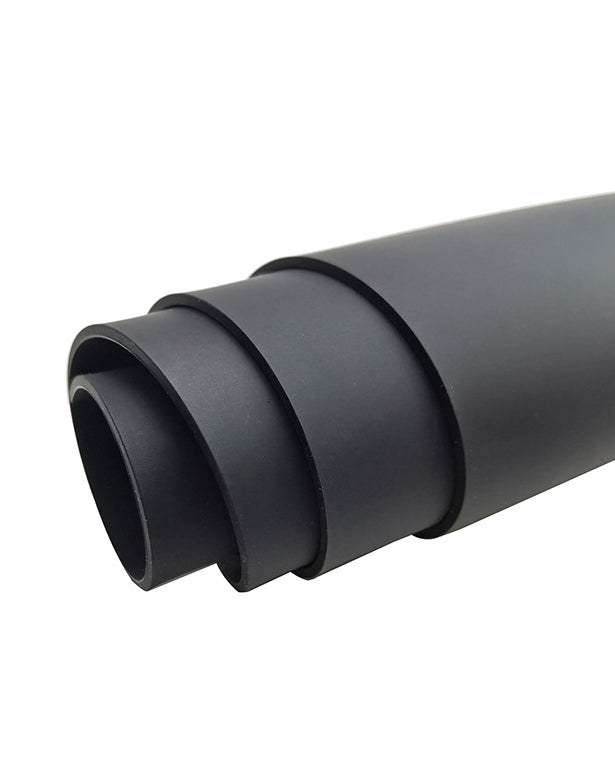


For vulcanized rubber materials used in pipeline joint seals for water and drainage systems, it specifies material properties, testing methods, and application requirements.
Core Objectives
- Ensure that vulcanized rubber seals resist water, chemicals, and temperature changes during long-term use, prevent leakage, and ensure system safety.
- Cover drinking water, hot water, sewage, and rainwater systems, with an applicable temperature range from cold water (≤50℃) to high-temperature conditions (intermittent ≤95℃).
Application Scenarios
- Pipeline connections: Sealing for socket or flange connections of pipes made of concrete, plastic, glass fiber, etc.
- Key components: Gaskets for equipment such as valves, pipe fittings, and manholes, which must meet erosion resistance requirements against different water qualities (e.g., chlorinated water, sewage).
Material Performance Requirements and Testing Methods
- Basic Physical Properties
| Item | Testing Standard | Typical Requirements (taking hardness 50 IRHD as an example) | Significance |
|---|---|---|---|
| Hardness | ISO 48 | 50 ±5 IRHD | Ensure tight fit between seals and pipes |
| Tensile strength | ISO 37 | ≥9 MPa | Resistance to tearing and deformation |
| Elongation at break | ISO 37 | ≥375% | Adapt to deformation from pipe thermal expansion/contraction |
| Compression set | ISO 815 | 72h@23℃ ≤12%; 24h@70℃ ≤20% | Maintain elastic recovery under long-term compression |
- Aging Resistance and Environmental Adaptability
-
Hot air aging:
After 7 days @70℃, hardness change ≤±8 IRHD, tensile strength loss ≤20%, elongation change ≤±30%.
Function: Simulate material stability in high-temperature environments. -
Ozone resistance test:
Exposed to 50 ppb ozone at 40℃ for 72 hours, with no cracks (refer to ISO 1431-1).
Application scenario: Outdoor pipeline systems need to resist ozone erosion. -
Low-temperature performance:
Compression set at -10℃ ≤40%; hardness change at -25℃ ≤+18 IRHD.
Function: Prevent seal failure due to low-temperature embrittlement.
- Chemical Compatibility
-
Volume change in water:
After 7 days of immersion @70℃, volume change ≤±8% (ISO 1817).
Purpose: Evaluate the risk of swelling or shrinkage in long-term water environments. -
Oil compatibility:
After 72h immersion in Oil No.1 (mineral oil) or Oil No.3 (synthetic oil) @70℃, volume change ≤±10% (ISO 1817).
Application scenario: Industrial pipelines in contact with lubricating oils or chemical media.
III. Certification System and Market Access
- CE Certification (EU Market)
- Regulatory basis: Construction Products Regulation (CPR) 305/2011/EU, which requires seals to meet the performance indicators of EN 681-1.
-
Certification modes:
- Module A (self-declaration): Applicable to low-risk products; manufacturers conduct their own tests and issue declarations.
- Module B+C2 (third-party type inspection + factory audit): High-risk scenarios (e.g., drinking water systems) require participation from notified bodies.
- Technical documents: Must include material composition, test reports, production process flowcharts, and EC Declaration of Conformity (DoC).
- KTW Certification (German Drinking Water Safety)
- Testing standard: EN 681-1 as the core basis, with additional evaluation of harmful substance migration (e.g., TFN, TON, TOC indicators).
-
Special requirements:
- Testing conditions are divided into cold water (23℃), warm water (30℃), and hot water (60℃) to simulate different usage scenarios.
- Submission of PMI form (material composition list) and product drawings is required; the certification cycle is approximately 4-6 weeks.
- Market impact: KTW certification is widely recognized across EU countries and is a mandatory requirement for exporting drinking water system components to Europe.