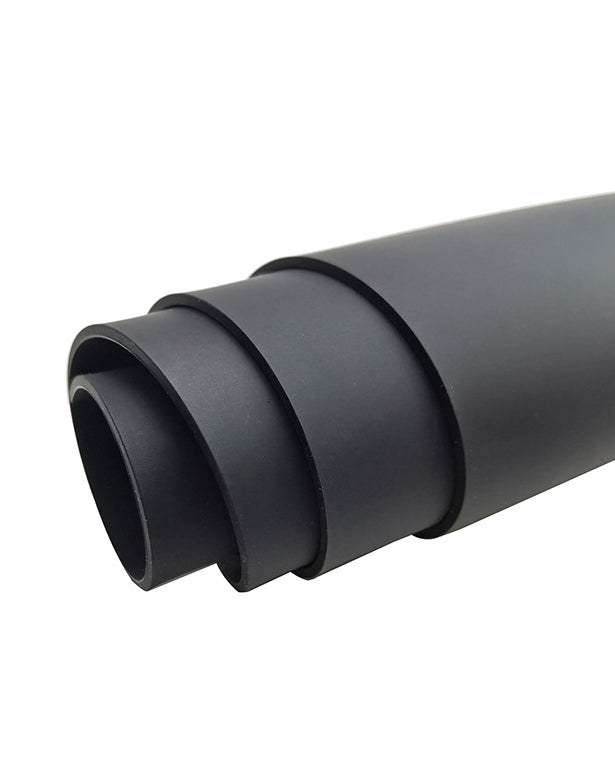


As a supplier specializing in sealing and protection solutions, Pexxon Rupper rubber gaskets, leveraging differentiated rubber material formulations (such as nitrile rubber, fluororubber, silicone rubber, etc.) and precision molding processes, can adapt to multiple industry scenarios including petrochemical, electronics and electrical, medical devices, and optical equipment. Their functions cover four key dimensions: "sealing and barrier, mechanical cushioning, safety protection, and system stability". Each function strictly complies with the corresponding industry technical specifications to ensure in-depth alignment with equipment operation requirements. Functional Analysis by Field: Technical Details from Principle to Implementation
1. Sealing and Barrier: The "Zero-Leakage Defense Line" for Fluid Systems
Core Function
As a key sealing component for connecting industrial equipment and pipelines, it can effectively prevent the leakage of fluid media such as gases and liquids, while blocking external impurities from entering the system interior—ensuring medium purity and stable delivery.
Materials and Principles
It relies on the "elastic deformation property" of rubber materials: when compressed, rubber can fit tightly against the sealing surface and fill micro-gaps (with precision reaching the 0.01mm level). Different materials are tailored to specific media:
Fluororubber gaskets: Resistant to highly corrosive media (strong acids, organic solvents)
Nitrile rubber gaskets: Suitable for oil-based media
Silicone rubber gaskets: Compatible with food-grade fluids
Industry Standards and Parameters
Strictly compliant with ISO 13000 (Mechanical Sealing System Standard) and GB/T 10708.1 (Rubber Gaskets for Pipe Flanges Standard). Leakage rates are categorized by application scenarios:
High-precision scenarios (e.g., high-purity gas delivery in semiconductor manufacturing, medical equipment fluid lines):
Gas leakage rate ≤ 0.01 m³/h
Liquid leakage rate ≤ 0.1 mL/h
Conventional industrial scenarios (e.g., chemical pipelines, hydraulic systems):
Gas leakage rate ≤ 0.5 m³/h
Liquid leakage rate ≤ 1 mL/h
Typical Applications
Flange connections for crude oil pipelines in the petrochemical industry
Sealing of liquid sauce storage tanks in food processing equipment
Coolant circulation pipeline interfaces in automotive engines
2. Shock Absorption and Cushioning: The "Mechanical Protection Pad" for Equipment Lifespan
Core Function
Absorbs vibration energy and impact loads during equipment operation, reduces rigid collisions between components, minimizes mechanical wear, and extends the service life of core equipment parts (e.g., bearings, gears, motors).
Materials and Principles
Based on the "adjustable elastic modulus of rubber" in material mechanics: Natural rubber and neoprene can achieve an elastic deformation range of 100%-300%. When impacted, they convert kinetic energy into elastic potential energy, which is then slowly released through internal molecular friction—achieving "dual effects of shock absorption and noise reduction". The gasket’s thickness (typically 3-20mm) and hardness (40-80 Shore A) can be customized according to equipment vibration frequency.
Technical Verification and Effects
Tested via "vibration and impact testing" (per GB/T 2423.10): After installing Pexxon Rupper cushioning gaskets on the motor base of a 3000 r/min motor, the vibration amplitude was reduced from 0.5mm to below 0.1mm, and component failure rate decreased by over 40%.
Typical Applications
Workbench support for heavy machine tools
Suspension system connectors in automotive chassis
Connections between motors and casings in fan equipment
3. Electrical Insulation: The "Current Barrier Layer" for Safe Operation
Core Function
Blocks current conduction in electrical equipment to prevent leakage and short-circuit accidents, ensuring operator safety and stable operation of electrical systems—especially suitable for complex electrical environments such as high voltage and high humidity.
Materials and Principles
High-insulation rubber materials (e.g., silicone rubber, EPDM rubber) are used. Their molecular structure contains no free electrons, effectively blocking current paths. Some products add insulating fillers (e.g., ceramic powder, mica powder) to further improve voltage resistance.
Industry Standards and Parameters
Compliant with IEC 60034 (Insulation Specifications for Rotating Electrical Machines) and GB/T 16935.1 (Insulation Coordination for Equipment in Low-Voltage Systems). Key indicators:
Insulation resistance: ≥ 100 MΩ at room temperature and atmospheric pressure (≥ 500 MΩ for gaskets used in high-voltage equipment)
Voltage resistance: ≥ 15 kV/mm (no breakdown or flashover under power frequency voltage)
Typical Applications
Busbar support components in high-voltage switchgear
Sealing for motor terminals in household washing machines
Insulation gaskets for circuit boards in photovoltaic inverters
4. Positioning and Fixing: The "Structural Stabilizer" for Assembly Precision
Core Function
Accurately positions the relative positions of components during equipment assembly, prevents displacement caused by vibration or impact during operation, and ensures overall structural precision and operational stability of the equipment.
Materials and Principles
"Precision compression molding" ensures the gasket’s dimensional tolerance (±0.05mm). Some products are designed with positioning bosses or grooves to fit precisely with component mounting holes. The micro-elasticity of rubber compensates for assembly errors while avoiding hard contact wear between metal components.
Process Requirements and Effects
Per ISO 8015 (Assembly Precision Standard), in the assembly of joint components for medical equipment (e.g., surgical robots), the use of Pexxon Rupper positioning gaskets controls component displacement within 0.02mm, meeting precision operation requirements.
Typical Applications
Fixing of PCB boards in electronic equipment
Positioning of guide sliders in CNC machine tools
Sealing and positioning of gear shafts in automotive gearboxes
5. Corrosion Protection: The "Chemical Isolation Barrier" for Metal Components
Core Function
In corrosive environments (e.g., chemical industry, marine), it isolates corrosive media (acids, alkalis, salt spray, organic solvents) from metal components, delays metal oxidation and rusting, and extends equipment maintenance cycles.
Materials and Principles
Chemically resistant rubber materials (e.g., fluororubber, perfluoroelastomer) are selected for their stable molecular chain structure, which resists chemical reactions with corrosive media. Some gaskets undergo PTFE coating treatment to further enhance corrosion resistance (withstanding 98% concentrated sulfuric acid and 50% sodium hydroxide solution).
Testing Methods and Verification
Verified via "immersion testing" (per GB/T 528): After immersing the gasket in 20% hydrochloric acid solution at 50℃ for 72 hours, the volume change rate is ≤ 5%, the tensile strength retention rate is ≥ 80%, and no cracking or swelling occurs.
Typical Applications
Flange sealing for chemical reaction kettles
Oil pipeline interfaces on offshore platforms
Connections for acid-alkali tanks in electroplating equipment
6. Sound Insulation and Noise Reduction: The "Acoustic Regulator" for Acoustic Environments
Core Function
Absorbs air-borne and structure-borne noise generated by equipment operation, reduces noise transmission, and creates environments that meet acoustic requirements (e.g., laboratories, recording studios, hospital consulting rooms).
Materials and Principles
Based on the "sound absorption properties of porous rubber" in acoustics:
Closed-cell foam rubber: Reflects high-frequency sound waves
Open-cell rubber: Consumes sound wave energy through air vibration in pores
The gasket’s thickness (5-30mm) and porosity (30%-60%) can be customized according to noise frequency (200-2000Hz).
Performance Indicators and Scenarios
Noise Reduction Rating (NRR) reaches 15-25 dB:
Recording studio equipment (e.g., microphone stands, audio workstations): High-sound-absorption silicone rubber gaskets reduce equipment noise from 50 dB to below 30 dB.
Industrial workshops (e.g., air compressors, water pumps): Combinations of rubber gaskets and metal brackets reduce structure-borne noise, lowering workshop ambient noise by 10-15 dB.
Typical Applications
Sound insulation for recording studio equipment
Noise reduction for industrial workshop machinery
Acoustic optimization for hospital consulting rooms
7. Thermal Insulation: The "Heat Transfer Blocker" for Temperature Systems
Core Function
Reduces heat transfer at the junctions of high/low-temperature components, prevents performance degradation of low-temperature components due to heat absorption, avoids operator scalding from high-temperature components, and maintains equipment temperature stability.
Materials and Principles
Rubber materials with low thermal conductivity (e.g., neoprene, silicone rubber, thermal conductivity ≤ 0.2 W/(m·K)) are used. Some products are compounded with thermal insulation fillers (e.g., glass wool, rock wool) to form a "rubber + thermal insulation layer" composite structure, further reducing heat transfer efficiency.
Typical Applications
Connection between refrigerator condensers and cabinets (prevents cold loss)
Pipeline interfaces of industrial kilns (blocks high-temperature conduction to brackets)
Sealing of battery packs in new energy vehicles (isolates external high temperatures from batteries)
8. Anti-Slip Stabilization: The "Friction Enhancer" for Operational Safety
Core Function
Increases friction between components and contact surfaces, prevents sliding or displacement during equipment operation or handling, and ensures operational safety and process precision.
Materials and Principles
Leverages the "high friction coefficient of rubber" (≥ 0.6 on dry surfaces, ≥ 0.4 on wet surfaces). Some products feature diamond or striped anti-slip textures on the surface to increase contact area. The gasket’s hardness is controlled at 50-60 Shore A to balance anti-slip performance and wear resistance.
Typical Applications
Pedal pads for mechanical operation platforms
Anti-slip floor pads in elevator cabins
Conveyor belt support gaskets in logistics sorting equipment
9. Optical Protection: The "Safety Shield" for Precision Optics
Core Function
Protects precision optical components (e.g., lenses, prisms) in optical equipment, isolates them from vibration, impact, dust, and oil pollution, prevents component scratches and contamination, and ensures stable optical performance.
Materials and Principles
Low-volatility, high-purity rubber (e.g., medical-grade silicone rubber) is used to avoid harmful substance emissions that could contaminate optical surfaces. Gaskets are designed with a "soft contact structure"—the contact pressure with optical components is ≤ 0.1 MPa to prevent component deformation. Some products feature dust-proof sealing, compliant with ISO 10110 (Optical Component Protection Standard).
Typical Applications
Fixing of objective lenses in microscopes
Sealing of image sensors in cameras
Optical path interface protection in laser measurement equipment
10. Fluid Purification: The "Impurity Filter" for Delivery Systems
Core Function
Blocks external impurities (e.g., dust, metal shavings, microorganisms) from entering the system at fluid pipeline connections, ensures fluid purity, prevents pipeline blockages and valve jamming, and maintains delivery efficiency.
Materials and Principles
Some gaskets have built-in micron-level filter layers (filtration precision 5-20μm); others block impurities via "tight fitting" of rubber sealing surfaces. Gaskets for the food and pharmaceutical industries comply with FDA (U.S. Food and Drug Administration) and GMP (Good Manufacturing Practice) standards to ensure no secondary fluid contamination.
Typical Applications
Juice delivery pipelines in the food and beverage industry
Liquid medicine filling lines in the pharmaceutical industry
Ultrapure water delivery systems in the electronics industry
Summary of Functional Value: From Technical Adaptation to Industry Empowerment
The core advantages of Pexxon Rupper rubber gaskets lie in "modular functions, customized materials, and standard compliance". Tailored to the specific needs of different industries (e.g., corrosion resistance for the chemical industry, cleanliness for the medical industry, low pollution for the optical industry), Pexxon Rupper provides end-to-end solutions from material formulation to structural design.
Each function undergoes rigorous laboratory testing (e.g., leakage rate testing, insulation resistance testing, aging resistance testing) and on-site verification to ensure "long-term stable operation" in industrial scenarios. This delivers multi-dimensional protection for equipment safety, process precision, and operator safety.
-
3M double-sided adhesive silicone sheet Processed silicone rubber gasket Rubber insulation sealing pad Workbench table pad
3M double-sided adhesive silicone sheet Processed silicone rubber gasket Rubber insulation sealing pad Workbench table pad
常规价格 ¥17.00 促销价 ¥8.00 -
A-Type Sealing Strip EPDM Foamed Rubber Sealing Strip

A-Type Sealing Strip EPDM Foamed Rubber Sealing Strip
¥3.00 -
Adhesive Backed Custom Profile Closed Cell Seal

Adhesive Backed Custom Profile Closed Cell Seal
常规价格 ¥1.20 促销价 ¥0.80