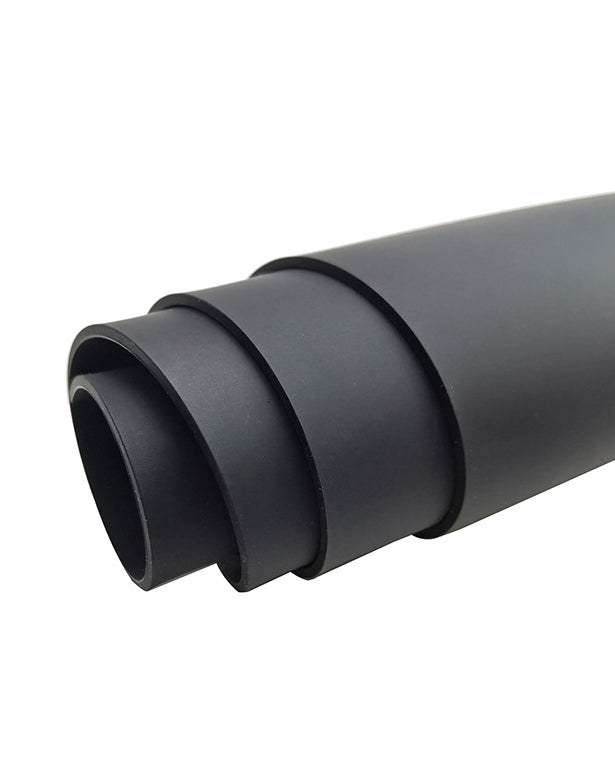


The protection of cables in heavy-duty equipment like mining machinery, construction machinery, and port handling equipment is directly related to operational stability, safety, and service life. As essential protection for cables, grommets must withstand environmental challenges such as heavy load compression, extreme temperatures, oil and corrosion, and friction and wear. Rubber grommets and plastic grommets are the mainstream choices, but they differ significantly in performance and suitable applications. This article will comprehensively compare the core differences between these two products based on the usage needs of heavy-duty equipment, assist customers with grommet customization needs in making precise selections, and analyze the customization advantages of rubber grommets.

The operating environment for heavy-duty equipment is generally complex, involving vibration, impact, oil, extreme temperatures, and chemical media. The cables and hoses used are critical pathways for driving the equipment. The material used for the grommet, as the primary protective layer, directly determines the service life of the wiring and the safety of the equipment. Rubber and plastic are common materials, but how does one make the most reliable choice for heavy-duty equipment?
Core Performance Comparison: Rubber vs. Plastic Grommets
1. Advantages of Rubber Grommets
Durability and Elasticity: Rubber grommets are renowned for their excellent elasticity and flexibility, effectively resisting physical damage and vibration, which is particularly important for heavy-duty equipment operating in harsh environments.
Weather Resistance: Under extreme temperatures, whether severe cold or intense heat, rubber grommets maintain stable performance, resisting becoming brittle or softening.
Environmental Protection and Renewability: With growing environmental awareness, rubber grommets made from renewable resources are becoming an increasingly popular choice. They not only reduce environmental impact but also support sustainability goals.
2. Advantages of Plastic Grommets
Cost-Effectiveness: For projects with limited budgets, plastic grommets offer an economical solution. They are typically cheaper than rubber grommets while still meeting basic protection needs.
Lightweight and Easy Installation: Plastic grommets are relatively lightweight, facilitating transportation and installation, which can significantly save on labor and material costs.
Diverse Design Options: Plastic materials are easy to mold, allowing for the production of products in various shapes and colors to meet different aesthetic and functional requirements.
Selection Guide: Rubber or Plastic Based on Working Conditions?
Choose Rubber Grommets if your equipment faces any of the following conditions:
Extreme Working Conditions: Environments with strong vibration, impact, and mechanical stress, such as mines, ports, and construction sites.
Oil-Rich Surroundings: Areas in prolonged contact with various lubricants, fuels, and hydraulic oils, such as near hydraulic systems or in engine compartments.
Wide Temperature Challenges: Equipment needs to operate stably in extremely cold or high-temperature environments.
Stringent Sealing Requirements: Applications with strict demands for waterproofing, dustproofing, and moisture resistance (e.g., outdoor engineering machinery, agricultural equipment).
Pursuit of Long Service Life: Aiming to reduce replacement frequency and pursue longer service life and overall cost-effectiveness.
Consider Plastic Grommets if your situation involves:
Static or Light Use: Basic bundling and protection on indoor equipment or light machinery with minimal vibration.
Extreme Cost Sensitivity: Very limited procurement budget, and the equipment's working conditions are relatively good with low performance requirements.
Specific Chemical Resistance: Need to resist certain acids, alkalis, or chemicals that rubber does not tolerate well (requires specific material verification).
Customized Adaptation Solutions for Rubber Grommets in Different Heavy-Duty Equipment Scenarios
Excavators, Loaders, Mining Machinery
Scenario Characteristics: Heavy load impact, coal dust, hydraulic oil contamination, outdoor high and low temperatures.
Customization Solution: Select oil-resistant and wear-resistant NBR rubber material, Shore A hardness 75A. Customize the inner diameter based on the recommended cable bundle size. Design flared ends on both sides to prevent cable abrasion. Add an anti-static formulation (surface resistivity ≤ 10⁸ Ω) to prevent static accumulation in dusty environments.
Cranes, Gantry Cranes, Port Handling Equipment
Scenario Characteristics: Frequent bending, sea breeze salt spray corrosion, outdoor exposure.
Customization Solution: Use weather and salt spray-resistant EPDM rubber material. Bending angle ≥ 180°. Customize with a corrugated structure to enhance flexibility. Apply an anti-slip surface treatment. Size to fit the large-diameter cables of lifting equipment. Service life can reach over 8 years.
Road Rollers, Pavers, Engineering Machinery
Scenario Characteristics: High-temperature operation, vibration impact, asphalt oil contamination.
Customization Solution: Select high-temperature and oil-resistant Fluoroelastomer (FKM) material, maximum temperature resistance 150°C. Add reinforcing agents to improve vibration resistance. Customize with mounting buckle designs for easy fixation to the equipment frame, preventing displacement and wear due to vibration.
Why are Customized Rubber Grommets More Recommended for Heavy-Duty Equipment?
Meets the Specific Needs of Heavy-Duty Equipment: Different equipment has varying cable specifications, installation locations, and usage environments. Custom rubber grommets can solve the precise fitment issues of universal plastic grommets through material formula adjustments and precise dimensional matching.
Reduces Comprehensive Cost of Ownership: The service life of rubber grommets is 2-3 times longer than that of plastic grommets. Their impact resistance and aging characteristics reduce the frequency of cable repairs and replacements, making them more economical in the long run compared to frequently replacing plastic grommets.
Enhances Equipment Safety Protection: Customized rubber grommets can incorporate functions like flame retardancy, anti-static properties, and high-voltage insulation based on equipment safety requirements, preventing equipment failure and safety incidents caused by cable protection failure.
Customization Process for Heavy-Duty Equipment Rubber Grommets: From Requirement to Delivery

Requirement Communication: Provide equipment type, cable outer diameter, quantity/specifications, installation location, usage environment, safety requirements (flame retardancy, anti-static, etc.). A preliminary solution is provided.
Material and Solution Confirmation: Recommend suitable materials based on requirements. Provide 3D design drawings. Confirm dimensions, shape, and functional parameters. Sign a customization agreement.
Sample Production and Testing: Produce small-batch samples. Conduct abrasion, oil resistance, and temperature resistance tests. Provide test reports. Upon sample approval and acceptance, proceed with mass production.
Mass Production and Quality Control: Each batch of products undergoes dimensional accuracy, hardness, and visual inspection.
Packaging and Delivery: Use anti-static and anti-crush packaging. Deliver according to the agreed timeline. Provide installation guidance and a 12-month warranty service.
Key Points for Grommet Selection in Heavy-Duty Equipment
Don't Focus on Price Alone: Plastic grommets have a lower initial purchase cost but typically need replacement every 1-2 years, leading to a higher long-term cost of ownership compared to rubber grommets. Customized rubber grommets, while slightly higher in initial cost, offer a better comprehensive value due to their longer service life.
Avoid Using a Single Specification: Heavy-duty equipment cable protection needs are specific. Universal grommets often cannot adapt to complex scenarios, easily leading to protection failure. It is recommended to choose customized or properly specified rubber grommets.
Prioritize Material Suitability: Select materials based on the usage environment: choose NBR rubber for oil contact, Fluoroelastomer for outdoor high temperatures, Silicone rubber for low-temperature environments. Avoid premature aging caused by incorrect material selection.
If your heavy-duty equipment has cable protection needs, or if you require custom-designed rubber grommets, please contact Pexxon Rubber Plant. We will provide you with a free custom design solution and produce test samples, ensuring the grommets precisely match your equipment's protection requirements and safeguard the long-term stable operation of your equipment.