

The global automotive industry is accelerating its transition to electrification. The development of EVs is not only changing powertrain systems and vehicle architectures but also driving transformations in upstream materials, including rubber. As an indispensable functional material in automobiles, rubber plays a critical role in sealing, vibration damping, insulation, and wear resistance. With the significant changes in the structure, performance, and usage scenarios of electric vehicles, the rubber industry is undergoing technological innovation.

Lightweighting Demands Drive Rubber Material Upgrades
To extend the driving range of EVs, there is a widespread pursuit of vehicle lightweighting. While traditional rubber components account for a relatively small proportion of total vehicle mass, under stringent lightweighting strategies, new low-density rubbers, microcellular foamed rubbers, and rubber-plastic composite materials have emerged. These materials reduce weight while maintaining mechanical properties. For example, replacing some traditional EPDM rubber with TPE thermoplastic elastomers can reduce the weight of rubber components by 15%–30%.
Electric Drive Systems Spur Development of High-Voltage and Corona-Resistant Rubbers
The 400V–800V high-voltage battery systems and motors in EVs impose higher requirements on the electrical properties of rubber. Traditional rubber is prone to corona discharge at high voltages, leading to material aging and cracking. Consequently, rubber companies have developed specialized rubbers with high insulation and corona resistance, such as modified silicone rubber, HNBR, and FKM fluorocarbon rubber. These are used in battery pack sealing rings, high-voltage cable sheathing, and motor insulation components to ensure the reliable operation of battery systems and motors.
Quietness Needs Drive Development of Acoustic Functional Rubbers
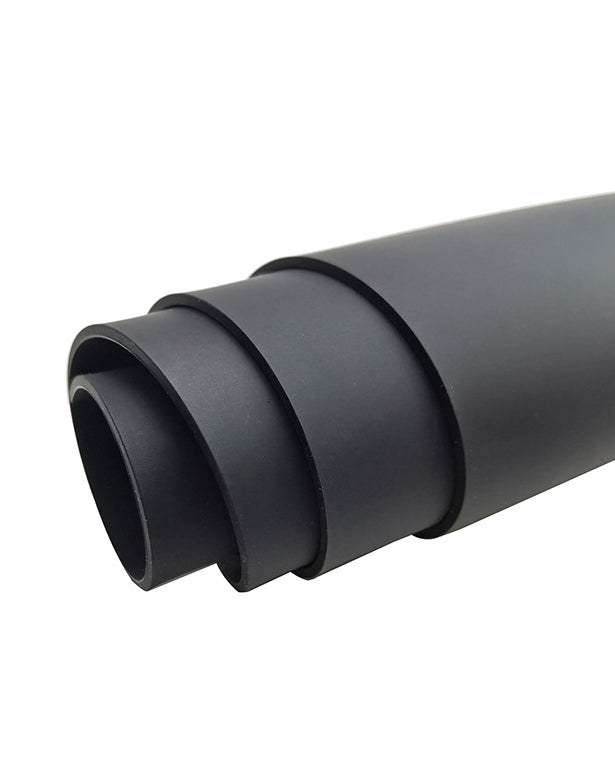
Without a traditional internal combustion engine, EVs lack engine noise, making road noise, wind noise, and high-frequency whine from the electric drive system more prominent. This has prompted a shift for rubber components from providing simple vibration damping to incorporating active noise reduction requirements. New products like acoustically optimized rubber sheets, damping rubber composites, and gradient structure rubber pads are being widely used in areas such as cabin flooring, wheel arches, and battery pack housings to effectively absorb and block specific frequency noises, enhancing ride comfort.
Thermal Management Needs Generate Demand for High/Low-Temperature Resistant Rubbers
EV batteries need to operate within an optimal temperature range of approximately 15–35°C, making their thermal management systems far more complex than those in ICE vehicles. Cooling circuit hoses and seals are constantly exposed to coolant and face wide temperature cycling from -40°C to 150°C. Traditional rubber can harden at high temperatures and become brittle at low temperatures. Therefore, developing rubbers resistant to extreme temperatures and coolant corrosion has become a key R&D focus, ensuring the long-term reliability of the thermal management system.

Customization and Intelligence Become New Industry Trends
EV platforms are highly integrated and modular, demanding higher dimensional accuracy and functional integration from rubber components. Rubber enterprises are transitioning from standardized part suppliers to providers of systematic solutions, offering customized products like integrated battery pack sealing modules and motor mount-damping-insulation composite parts. Simultaneously, smart rubber materials are beginning to see pilot applications in premium vehicle models.
The rise of electric vehicles represents not just a change in powertrain form but a restructuring of the entire automotive manufacturing material system. Faced with the trend of electrification, rubber companies must pursue continuous innovation, achieving breakthroughs simultaneously in material chemistry, structural design, manufacturing processes, and sustainability to succeed in this new era of new energy. The future belongs to high-performance, multi-functional, green, and intelligent rubber materials.
Facing the rapid development of the electric vehicle industry, the customized rubber manufacturer Pexxon Rubber initiated R&D efforts for new energy vehicle-related rubber products as early as 2020. Through material modification, structural optimization, and acoustic design, the company is comprehensively adapting its products to mainstream electric vehicle models. Pexxon Rubber is now transitioning from a traditional tire manufacturer to a solutions provider for new energy mobility systems.