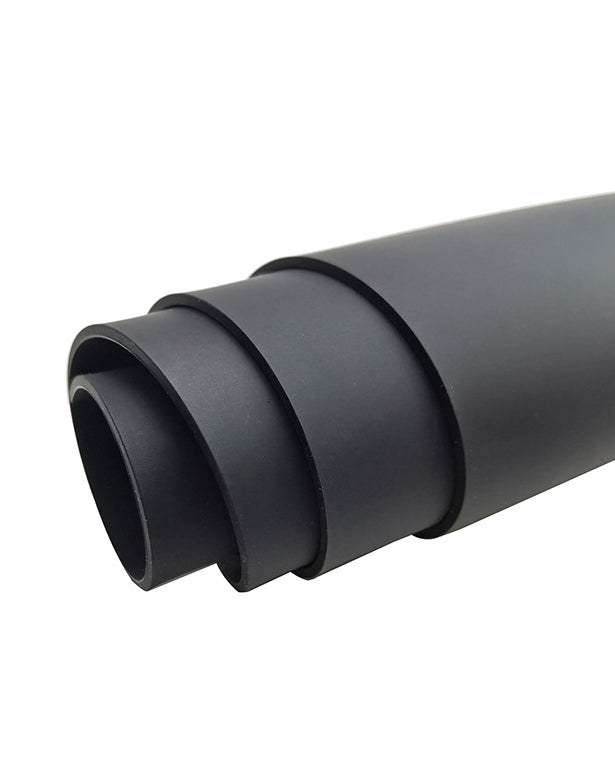


In industrial production, machinery and equipment require long-term stable operation, and the sealing performance of rubber gaskets directly determines equipment stability, production efficiency, and compliance costs. According to internal statistics from rubber product manufacturer Pexxon, 70% of sealing failures originate from a mismatch between material and working conditions. This article provides a gasket customization guide based on rubber gasket materials and working conditions, aiming to help select the most suitable material for specific conditions and increase seal life by over 30%.

1. Can Mass-Produced Universal Rubber Gaskets Handle All Working Conditions?
Common universal rubber gaskets may function in ordinary environments, but they are highly likely to fail under extreme temperatures, chemical media, or sustained pressure. Potential issues include:
Becoming Brittle and Cracking at High Temperatures: Loss of elasticity leads to seal failure.
Swelling and Deforming in Oil: Volume expansion causes a sharp increase in assembly stress or extrusion.
Hardening and Losing Elasticity at Low Temperatures: Inability to follow micro-deformations of the joint surface, creating leakage gaps.
Cracking under Ozone or UV Exposure: Especially in outdoor applications, significantly shortened lifespan.
Therefore, rubber gasket customization requires understanding and analyzing your specific application environment to select the most suitable specialty rubber material.
2. Adaptation to Working Conditions and Key Customization Points for Different Rubber Gasket Materials
EPDM Rubber Gaskets: Universal, Weather-Resistant, Cost-Effective
Key Condition Adaptation: Temperature -40°C to 120°C; suitable for water, steam, weak acids/alkalis, ozone environments; Pressure ≤ 1.6 MPa.
Typical Applications: HVAC pipelines, water supply/drainage systems, automotive cooling systems, outdoor equipment seals, general machinery parts.
Customization Advantages: Strong weather resistance, no significant aging after 5 years outdoors; cost is only 30% of fluorocarbon rubber; supports non-standard sizes, perforated/flanged structures, color customization.
Customization Notes: Avoid use in mineral oils, strong organic solvents; for temperatures >120°C, request high-temperature modifiers (can extend up to 150°C).
Fluorocarbon Rubber (FKM) Gaskets: Specialist for Harsh Conditions, High Temperature, and Corrosion Resistance
Key Condition Adaptation: Temperature -20°C to 200°C; suitable for strong acids/alkalis, strong oxidizers, mineral oils, fuel oils; Pressure ≤ 4.0 MPa.
Typical Applications: Chemical reactors, petroleum pipelines, automotive engines, aerospace equipment, high-end mechanical seals.
Customization Advantages: Top-tier corrosion resistance in the industry (≥90% property retention after 30 days immersion in 98% sulfuric acid); strong sealing stability, suitable for long-term continuous operation.
Customization Notes: Prone to embrittlement in low temperatures < -20°C; exports to Europe/Americas require UL certification, REACH compliance reports to avoid trade barriers.
Silicone Rubber Gaskets: Eco-Friendly, Low-Temperature, Food-Grade
Key Condition Adaptation: Temperature -60°C to 180°C; suitable for food contact, medical environments, low-temperature equipment; Pressure ≤ 1.0 MPa.
Typical Applications: Food machinery, medical devices, refrigerators/freezers, electronic equipment waterproof seals, maternal and infant equipment accessories.
Customization Advantages: Non-toxic, odorless, complies with FDA 21 CFR Part 177.2600 food-grade certification; remains flexible even at -60°C; can customize ultra-thin, transparent, semi-transparent products; supports small-batch rapid customization.
Customization Notes: Low mechanical strength, poor resistance to oils and strong acids/alkalis; for wear-resistant scenarios, request fiber reinforcement layer to increase tear strength by 30%.
Nitrile Rubber (NBR) Gaskets: Oil-Resistant, Industrial, Economical
Key Condition Adaptation: Temperature -20°C to 100°C; suitable for mineral oils, hydraulic oils, animal/vegetable oils; Pressure ≤ 2.5 MPa.
Typical Applications: Mechanical hydraulic systems, automotive transmissions, fuel pipelines, lubricating oil seals, industrial equipment parts for cross-border trade.
Customization Advantages: Excellent oil resistance (swelling rate ≤ 5%); affordable pricing; supports batch non-standard customization; higher cost-performance than similar materials.
Customization Notes: Poor weather and ozone resistance, unsuitable for outdoor or strong oxidation environments; for high-temperature exports, choose hydrogenated nitrile material (temperature resistance can be increased to 150°C).
Natural Rubber (NR) Gaskets: High Elasticity, Vibration Damping, and Cushioning
Key Condition Adaptation: -50°C to 80°C; suitable for water, air, inert gases, weak alkaline solutions (pH ≤ 8).
Typical Applications: General motor end cover seals, low-pressure water pump seal gaskets, household water purifier pipe seals, toy seals, daily-use waterproof gaskets.
Customization Advantages: Elongation at break ≥ 600%, offering the best elasticity among all rubbers, suitable for frequently disassembled or deforming seals; easy vulcanization molding, supports complex irregular structures; can bond with various substrates like metal and plastic without special treatment for good sealing.
Customization Notes: Strictly avoid contact with mineral oils, strong acids (pH < 5); prone to permanent deformation under high pressure ≤ 1.0 MPa (best for low-pressure scenarios); dry, room temperature environment preferred; avoid prolonged exposure to sunlight or high humidity.
3. Beyond Core Material: Other Details Affecting Rubber Seal Life
Shore A Hardness: Typically ranges from 30° to 90°. Lower hardness conforms more easily to rough surfaces for better sealing; higher hardness offers greater resistance to extrusion. Select based on sealing pressure.
Compression Set: This is a key indicator measuring the material's ability to recover elasticity after long-term use. A lower value indicates stronger resistance to aging and relaxation, leading to a longer lifespan.
Structure and Dimensional Tolerances: Provide precise drawings or samples to ensure the gasket perfectly matches the installation groove, avoiding early failure due to improper structure.
Recommendation from Rubber Product Supplier Pexxon:
By precisely matching material characteristics with actual working conditions, and combining this with regular maintenance checks – including timely replacement of aged seals to prevent potential failures – you can significantly enhance performance.

Rubber gasket customization is about making the material adapt to the working conditions, not vice versa. Choosing the right matching material can not only achieve a 30% increase in seal life but also reduce downtime maintenance losses and lower overall costs. If your equipment requires rubber gaskets tailored to specific working conditions, please feel free to contact us.