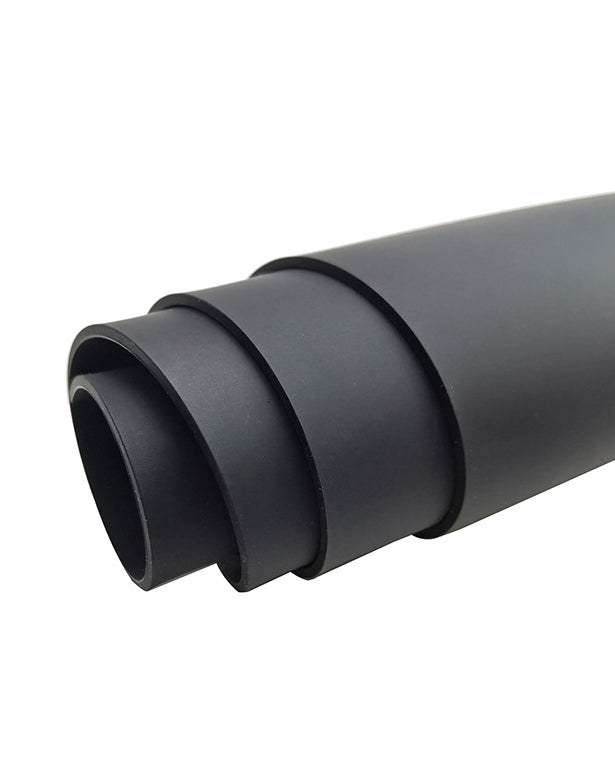


 When it comes to factors such as heavy rain, intense heat, temperatures below zero degrees Celsius, and the harsh mixture of ozone and acid rain, the real conditions faced by mechanical seals installed on bridges, solar power plants, and outdoor sensors in farmlands are quite different from the controlled conditions in the laboratory. These sensors can withstand the challenges of daily environments. Whether they can operate reliably for three years, five years, or even longer depends not only on the core chip but also on the key but often overlooked protective layer, the housing, and the sealing materials. Among all the available options, neoprene rubber stands out due to its inherent durability and elasticity, making it the preferred choice for protecting outdoor sensors.

1.The survival predicament of outdoor sensors is far more severe than you might think.
The survival challenges faced by outdoor sensors are far more complex than you might imagine. Unlike indoor sensors which can remain stable in a warm, dry, and corrosion-free environment, outdoor sensors must deal with a variety of extreme conditions. The primary goal of these challenges is to protect the sensor's protective layer.
• Ultraviolet rays and ozone attack: Ultraviolet rays in outdoor sunlight, especially the UV-B band, can directly damage the molecular structure of materials, causing the protective layer to crack, harden, and lose elasticity. At the same time, ozone in the air acts like molecular scissors, cutting the double bonds in rubber, causing the material to age from the inside. Ordinary natural rubber will show obvious cracks after being exposed to outdoor sunlight for one year, exposing the internal circuits and chips of the sensor.
• Dual tests of high and low temperatures: The severe cold in northern winters can reach minus 30°C, which makes ordinary rubber fragile and lose its sealing property. Rainwater seeping in will freeze and expand, directly damaging the internal components. In southern regions, the surface temperature exceeds 60°C, causing some rubber to soften and deform, thereby causing the seal to fail and even adhering to the sensor interface.

• Erosion by moisture and chemical substances: Rain, dew, and thick fog constantly impact the sensor's casing. If the sealing performance of the protective layer is insufficient, water will seep into the interior, causing a short circuit. In agricultural scenarios, pesticides and fertilizers, as well as acid rain and dust in industrial areas, will cause chemical corrosion to the protective material, accelerating its failure.
• Long-term wear from mechanical deformation: Outdoor sensors may be installed in vibrating environments such as bridges and wind turbine towers, or require regular maintenance and disassembly. The protective material must maintain elasticity for a long time to ensure that it still remains sealed after repeated deformation. The compression permanent deformation rate of ordinary rubber is relatively high, and it will lose its sealing function soon after use.
These challenges combined require the protective material of outdoor sensors to simultaneously possess multiple properties: weather resistance, resistance to high and low temperatures, chemical resistance, good elasticity, and resistance to aging. And EPDM rubber sheet is precisely the preferred choice that can simultaneously meet these requirements.

2. EPDM rubber sheet, a natural fit for outdoor sensor protection, the expert in safeguarding.
Ethylene propylene diene monomer (EPDM) rubber is a synthetic rubber formed by the copolymerization of ethylene, propylene and a small amount of non-conjugated dienes. Its molecular structure has almost no easily oxidizable double bonds in the saturated main chain and no side chains for regulation, which gives it the core advantages suitable for outdoor sensors. Each of its characteristics precisely targets the pain points of outdoor scenarios:
• Anti-aging superpower: Resisting the chronic damage caused by ultraviolet rays and ozone.
The outdoor sensors are most vulnerable to the gradual hardening and cracking of old materials, which eventually leads to the loss of their protective function. However, the molecular structure of EPDM inherently has anti-aging properties. Its main chain is composed of saturated carbon-carbon single bonds, and it does not have the double bonds in natural rubber or nitrile rubber that are prone to being oxidized by ozone. This is like giving the molecules a bulletproof suit, enabling them to directly resist the attack of ozone in the air.
More importantly, EPDM has a much higher tolerance to ultraviolet rays than ordinary rubber. The experimental data from the Pexxon rubber EPDM rubber sheet shows that after being exposed to outdoor sunlight for 5,000 hours, which is equivalent to outdoor use for more than 5 years, the tensile strength attenuation rate of the EPDM rubber sheet is only 8% to 12%, and the fracture elongation rate attenuation rate is less than 15%. There is no obvious cracking or discoloration on the surface; while under the same conditions, the tensile strength attenuation rate of the natural rubber sheet exceeds 50%, the surface will have obvious cracks, and the nitrile rubber sheet will even harden and become brittle, losing elasticity.

The inclination sensor installed in the photovoltaic power station needs to be exposed to the sun on the roof for more than 10 years. The EPDM rubber board-made sealing ring or outer protective layer can maintain its integrity for a long time, preventing the sensor from getting wet and short-circuiting due to material aging, and ensuring the stable collection of power generation efficiency data.
• Wide temperature tolerance range: Resilient across a broad temperature spectrum, from extreme cold to scorching heat.
Outdoor sensors are applied in various scenarios all over the world, ranging from bridge monitoring in the northeastern region at a temperature of -35°C to soil moisture monitoring in Hainan at over 40°C. The temperature variations are extremely large. However, the temperature resistance range of EPDM rubber sheets is as high as -40°C to 150°C. They can even withstand up to 180°C for a short period of time, truly being the champion in temperature adaptation. In low-temperature environments, ordinary rubber becomes hard and fragile due to the slowdown of molecular chain movement, while nitrile rubber loses elasticity at -20°C and the sealing ring may develop gaps. In contrast, the molecular chains of EPDM have excellent flexibility, and even in the extremely cold condition of -40°C, it can maintain more than 30% elastic deformation capacity, ensuring that the sealing ring does not crack and the sealing performance of the sensor housing is not affected.

In high-temperature environments, EPDM does not soften or deform either. The meteorological sensors installed in desert areas often have surface temperatures exceeding 60°C in summer. The protective layer made of EPDM rubber sheets will not stick together due to high temperature and will not release harmful substances that affect the components of the sensor, ensuring the accurate collection of temperature, wind speed, and other data.
• Elastic sealing provides long-lasting performance: Even after repeated deformation, no water will leak out.
One of the key requirements for outdoor sensors is waterproof and dustproof performance, which mainly depends on the elastic sealing property of the protective material. EPDM rubber sheets have an extremely high elastic recovery rate. Under the condition of 200°C × 70 hours, their compression permanent deformation rate is only 20% to 30%, which is much lower than that of natural rubber over 50% and silicone rubber around 40%. When EPDM rubber sheets are used as the sealing rubber for sensors, even when in a compressed state for a long time, the sealing performance of the sensor housing can gradually recover, unlike ordinary rubber which would collapse and form gaps. In outdoor sensors that meet the IP68 level of waterproof requirements, EPDM rubber sheets can ensure that in a simulated rainwater accumulation situation of 1-meter-deep water under a storm, there is no water seepage within 24 hours, which is crucial for hydrological monitoring sensors that need to work during the rainy season. Outdoor sensors may need to be disassembled for regular maintenance, and the high elasticity of EPDM enables it to withstand repeated disassembly and deformation. In soil moisture sensors in the agricultural field, they need to be pulled out and cleaned every quarter. The protective cover made of EPDM rubber can still closely fit the sensor body after dozens of disassemblies, preventing water and pesticides in the soil from seeping into the internal circuit.

• Resistant to chemicals and corrosion: Not affected by pesticides or acid rain.
Outdoor sensors are often exposed to various corrosive substances. In agricultural scenarios, there are herbicides, urea, and potassium dihydrogen phosphate; in industrial areas, there are acid rain and dust. All of these can cause chemical damage to protective materials. However, EPDM rubber sheets exhibit remarkable tolerance to common chemicals such as weak acids, weak bases, salt solutions, and alcohols, and will not be corroded or expanded. More importantly, EPDM does not react chemically with the electronic components inside the sensor, nor does it release harmful plasticizers, ensuring the safety of the material. This makes it highly suitable for outdoor sensing devices with high safety requirements, such as air quality sensors located outside food processing areas.

3. Compared with other materials, EPDM has the dual advantages of cost-effectiveness and compatibility.
When choosing materials, many people may wonder why silicone or fluororubber are not considered. After all, they also have good weather resistance. In fact, from the perspective of the performance, cost and processing requirements of outdoor sensors, the advantages of EPDM are more obvious:
• Compared with silicone: Silicone performs well in withstanding high and low temperatures, but its tear resistance is only half of that of EPDM. This is prone to being scratched by stones or branches in outdoor vibration environments. Moreover, the price of silicone is 1.5 to 2 times that of EPDM, and the cost pressure will be very high when applied on a large scale. For example, in photovoltaic power stations, tens of thousands of inclination sensors need to be installed, using EPDM as the protective material can not only ensure performance, but also effectively reduce the total cost.
• Compared with fluororubber: Fluororubber is indeed superior to EPDM in terms of chemical resistance and weather resistance, but its elasticity is poor, the compression permanent deformation rate is high, and the processing difficulty is also great. Its price is 3 to 5 times that of EPDM, and it is more suitable for special scenarios with strong corrosion.
However, most outdoor sensors, such as those in bridges, agriculture and meteorology, do not require such extreme chemical resistance. The performance of EPDM is already sufficient and it has a higher cost-effectiveness. With the expansion of outdoor sensing technology to extreme environments such as the polar regions and deserts, EPDM rubber plates will be upgraded through modification, adding carbon fiber reinforcement and graphene thermal conductivity, to unlock more protective capabilities.