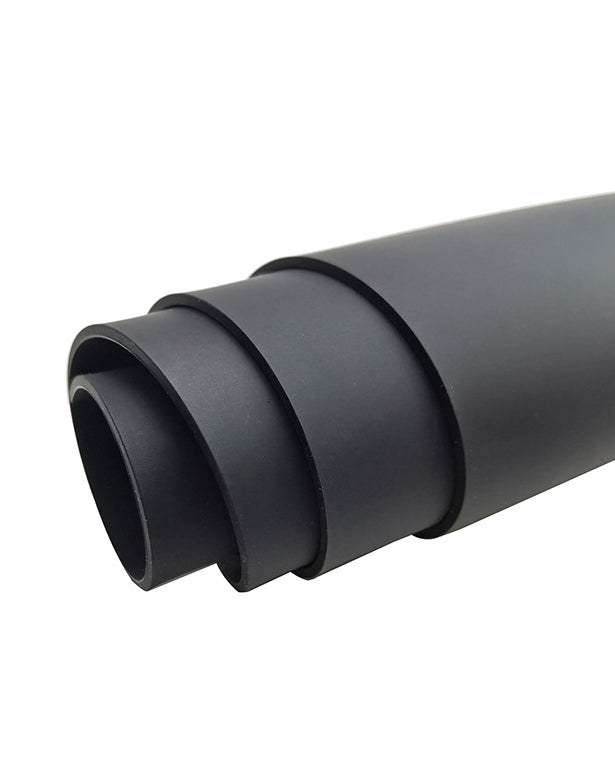


In rubber sealing applications, EPDM gaskets are the most widely chosen rubber sealing solution in industrial fields due to their excellent weather resistance, chemical corrosion resistance, high and low-temperature resistance, and superior sealing performance.

1. Core Characteristics and Applicable Scenarios
EPDM rubber is a copolymer of ethylene, propylene, and a small amount of diene. Its unique molecular structure grants it distinct properties, which also define the core scope of its suitable applications.
Scenarios Requiring Excellent Weather Resistance
Mechanism: EPDM's saturated polymer backbone provides极高的stability against ozone and UV radiation.
Performance: Can withstand UV, ozone, rain, and weathering. Resists cracking, chalking, and hardening after long-term outdoor exposure, significantly outperforming standard rubber in service life.
Industries & Applications:
HVAC: Seals for air conditioning duct connections, radiator seals, heat pump system seals.
Construction: Building door and window seals, roof waterproofing layers, bridge expansion joint seals.
Customization Points: For prolonged intense UV exposure, consider adding specific anti-aging agents.
Scenarios Involving Heat, Water, and Steam
Temperature Range: Stable long-term operation from -40°C to +130°C, with short-term peak tolerance up to 150°C.
Media Resistance: Excellent resistance to high-temperature saturated steam, hot water, and cold water, making it ideal for hot water/steam systems.
Industries & Applications:
Industrial Equipment: Steam pipeline flange gaskets, heat exchanger seals, boiler inspection port seals (short-term 150°C).
Appliances: Solar water heater seals, washing machine inlet seals, water heater connection seals.
HVAC: Seals for heating system components.
Customization Points: For continuous temperatures ≥100°C, opt for heat-modified EPDM with heat-resistant reinforcing agents.
Scenarios with Weak Corrosive Media
Core Compatibility: Resists weak acids, weak alkalis, salt solutions, alcohols, hot water, etc., without significant swelling or degradation.
Industries & Applications:
Water Treatment: Seals for potable water pipelines, wastewater treatment equipment interfaces, pure water equipment seals (excellent chlorine resistance).
Chemical Industry: Seals for storage tanks containing weak acid/alkali solutions, pesticide equipment piping seals, detergent production equipment seals.
Food & Beverage: Seals for equipment handling juices, beer, dairy products (using food-grade EPDM).
Customization Points: For food contact, select FDA-compliant EPDM without harmful additives. For chlorinated water, specify chlorine-resistant EPDM formulations.
Water System Sealing Scenarios (Waterproofing & Leak Prevention)
Core Properties: Hydrophobic, low water absorption (≤1%), does not swell or fail under long-term immersion.
Industries & Applications:
Piping Systems: Water pipe joint seals, valve seals, plumbing fixture connection seals.
Water Conservancy: Small water pump seals, water tank seals, water transmission pipeline flange seals.
Marine Equipment: Seals for nearshore aquaculture equipment, ship freshwater system seals (resists salt spray corrosion).
Customization Points: For high-pressure water systems (≥1.6 MPa), increase gasket thickness or use reinforced structures. For long-term immersion, select low-water-absorption formulas.
General Industrial Sealing Scenarios
Core Advantages: Stable sealing performance, abrasion resistance, ease of processing, adaptable to various equipment structures.
Industries & Applications:
General Machinery: Machine tool interface seals, compressor seals, motor end cover seals.
Electronics: Charging pile connector seals, server cabinet dust/water seals.
Transportation: Subway door seals, high-speed rail air conditioning system seals, rail vibration damping pads.
Customization Points: For high-frequency vibration equipment (e.g., compressors), optimize compression set resistance (target ≥75% recovery). For precision equipment, control dimensional tolerance strictly (e.g., ≤±0.1mm).

2. EPDM Gasket Application Profile Summary
Industry Typical Applications Selection Basis
Automotive Engine cooling system gaskets, radiator seals, door/window seals Excellent resistance to glycol-based antifreeze, ozone aging, wide temperature range
HVAC & Construction Solar water heater seals, cooling tower seals, building door/window seals, roof waterproofing pads Outstanding weather resistance, hot water resistance, and UV stability ensure long-term sealing
Industrial Equipment & Piping Steam pipeline flange gaskets, heat exchanger seals, water treatment equipment seals Top-tier steam resistance and tolerance to chemicals in cooling water
Appliance Manufacturing Washing machine door seals, dishwasher seals, water supply line connections Resists hot water, detergents, non-toxic, odorless, compliant with appliance standards
3. Unsuitable Working Conditions for EPDM Gaskets
EPDM should be avoided in the following conditions. Alternative materials like FKM (Fluorocarbon Rubber) or PTFE are recommended:
Strong Corrosive Media: Strong acids (e.g., sulfuric acid, hydrochloric acid), strong oxidizers (e.g., nitric acid).
Petroleum-Based Oils & Fuels: Swells and degrades in contact with gasoline, diesel, lubricating oils, hydraulic oils, and other hydrocarbons. (Use NBR or HNBR instead).
Hydrocarbon Solvents: Poor resistance to solvents like benzene, toluene, hexane.
Strong Solvents & Concentrated Acids: Not suitable for high-concentration acidic environments or certain strong organic solvents.
Sustained High-Temperature Beyond Limit: Not recommended for continuous use at temperatures ≥ 150°C (consider Silicone Rubber or FKM).

4. Customization Guide for EPDM Gaskets (For Custom Projects)
Define Operational Parameters: Provide specific details on working temperature, pressure, media type, installation environment, and immersion conditions.
Material Modification: Select specialized compounds based on needs: standard EPDM, heat-modified EPDM, chlorine-resistant EPDM, food-grade EPDM, etc.
Structure & Dimensions:
Shape: Flat gaskets, custom-shaped gaskets, gaskets with ribs, self-adhesive (PSA-backed) gaskets.
Size: Customized based on equipment interface dimensions. Control tolerances tightly (e.g., ≤±0.1mm) for perfect fit.
Hardness: Typically Shore A 50-70A. Choose 50-60A for low temperature/vibration; 60-70A for high pressure.
Certification Requirements: Specify needed certifications: FDA for food contact, RoHS/REACH for industrial compliance.