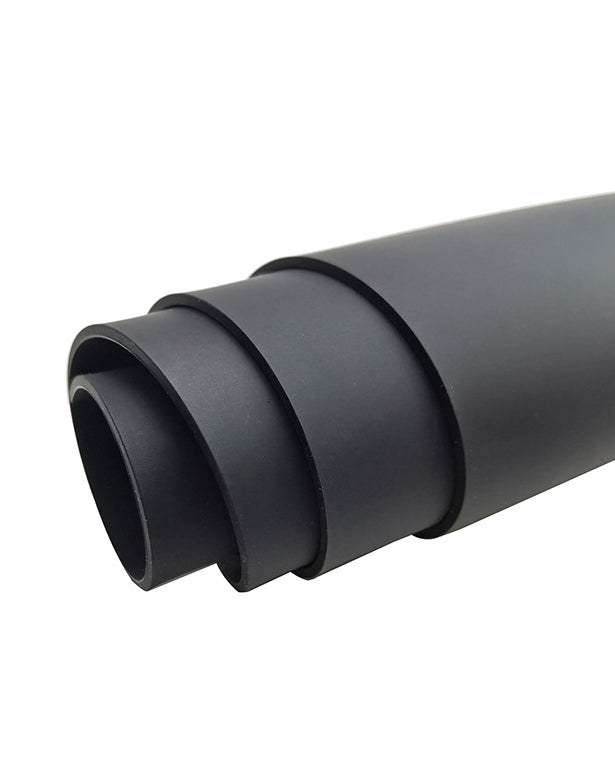


Fluororubber: Properties, Industrial Applications, Limitations, and Development Trends
Fluororubber refers to a class of synthetic rubber elastomers containing fluorine atoms. Its key properties include high temperature resistance, oil resistance, chemical resistance, ozone resistance, and aging resistance.
The performance advantages of fluororubber are concentrated in extreme environments:
-
Long-term service temperature range: -20°C to 200°C for ordinary FKM (fluororubber); for FFKM (perfluororubber), the range can reach -20°C to 320°C (with short-term resistance to temperatures up to 350°C).
- Resistance to rapid temperature changes: It can withstand rapid temperature switching from -50°C to 200°C without brittleness or softening.
-
Corrosion resistance: It resists most chemical media, including mineral oil, hydraulic oil, gasoline, diesel, lubricating oil, organic acids (e.g., acetic acid, citric acid), alkalis (e.g., sodium hydroxide, potassium hydroxide), and most solvents (e.g., ethanol, acetone, toluene).
- Limitations: It is not resistant to strong oxidizing media (e.g., fuming sulfuric acid, concentrated nitric acid, which may cause decomposition at high temperatures) and low-molecular-weight ketones (e.g., butanone).
-
Aging resistance:
- Ozone, UV, and atmospheric aging resistance: When exposed to outdoor environments or ozone for a long time, it shows no cracking, and the elastic attenuation rate is <5% (compared to >30% for general-purpose rubbers like NBR).
- Compression set resistance: After compression at 150°C for 70 hours, the compression set rate is <20% (per GB/T 7759 standard), making it suitable for long-term sealing scenarios.
-
Physical and mechanical properties:
- Tensile strength: 10–25 MPa (can be increased to over 30 MPa with fillers).
- Hardness: 60–90 Shore A (adjustable via formulation; softer grades for sealing, harder grades for wear-resistant components).
- Gas permeability resistance: Its permeability to oxygen, nitrogen, and hydrogen is only 1/10–1/5 that of nitrile rubber (NBR), making it suitable for high-pressure sealing.
-
Flame retardancy: It is inherently flame-retardant (oxygen index OI > 30, classified as a flame-retardant material) and can pass the UL 94 V-0 flame retardant certification without additional flame retardants. It is applicable to fields with high fire safety requirements, such as electrical engineering and aerospace.
Core Industrial Applications of Fluororubber
1. Automotive Industry
Nearly 40% of global fluororubber consumption is in the automotive manufacturing industry, mainly in powertrain and fuel systems. Fluororubber can withstand long-term erosion from high temperatures, fuel, lubricating oil, and various additives, ensuring the durability of automotive components. Key automotive components using fluororubber include:
- Engine oil seals (e.g., crankshaft oil seals, camshaft oil seals);
- Transmission oil seals and O-rings;
- Fuel pump seals and fuel injector sealing rings;
- Exhaust system flange gaskets;
- Turbocharger flexible joints.
These components need to operate continuously at 200°C (with short-term resistance to temperatures up to 250°C) and withstand multiple media such as gasoline, diesel, biofuels, ATF oil, engine oil, and coolants. The excellent performance of fluororubber ensures the stable operation of these components, guaranteeing the safety and performance of automotive powertrain and fuel systems.
In the new energy vehicle (NEV) sector, the application scope of fluororubber is expanding. For example:
- Sealing gaskets for power battery packs;
- Sealing gaskets for bipolar plates of hydrogen fuel cells.
These components can resist electrolytes (acid and alkali resistance) and hydrogen fuel (permeation resistance), meeting the IP68 protection rating.
2. Petrochemical Industry
Fluororubber is widely used in the petrochemical industry. Its outstanding resistance to aromatic hydrocarbons, acids, alkalis, and chlorinated solvents makes it an ideal choice for numerous sealing components. Specifically, fluororubber is extensively used in:
- Manufacturing various sealing gaskets and flange sealing rings;
- Sealing for valves and pump shafts;
- Producing pipe linings, diaphragms, and bellows.
Compared with general-purpose rubbers like NBR (nitrile rubber) and EPDM (ethylene propylene diene monomer rubber), fluororubber exhibits superior performance in resisting swelling and aging.
- Pipes and valves: Flange gaskets and valve sealing rings resist strong acids (e.g., hydrochloric acid, sulfuric acid), strong alkalis (e.g., sodium hydroxide), organic solvents (e.g., toluene, xylene), and high temperatures (180–200°C), preventing leakage of toxic and corrosive media.
- Reactors and storage tanks: Agitator shaft seals and tank mouth gaskets withstand high pressure (10–50 MPa), high temperatures (200°C), and complex chemical environments (e.g., polymerization reactions) inside reactors.
3. Aerospace Industry
Fluororubber was initially developed to meet the needs of the military aviation industry, and it remains a critical material in the modern aerospace sector. Its applications include:
-
Sealing rings for aircraft engines;
-
Sealing components for hydraulic systems;
-
O-rings for high-altitude instruments;
-
Hoses and gaskets for fuel systems.
-
Aircraft engines: Combustion chamber seals and fuel pump oil seals (made of FFKM) resist temperatures above 300°C and corrosion from aviation kerosene, ensuring stable engine operation at high altitudes.
-
Rocket propulsion systems: Seals for liquid fuels (e.g., liquid oxygen, liquid hydrogen) resist the ultra-low temperature of liquid hydrogen (-253°C) and the high temperature of propellant combustion (over 3000°C), with no leakage risk.
In these applications, fluororubber demonstrates excellent resistance to aviation kerosene and high-altitude ozone, as well as stability over an extreme temperature range (-40°C to +230°C).
4. Electronics and Semiconductor Industry
In ultra-clean environments for integrated circuit manufacturing, liquid crystal display (LCD) production, organic light-emitting diode (OLED) manufacturing, photovoltaic cells, and lithium batteries, fluororubber plays a key role due to its ultra-low pollution levels and excellent corrosion resistance. Its applications include:
- Manufacturing vacuum sealing rings, diaphragms, and valve seats;
- Sealing for chemical gas delivery pipelines;
- Producing seals for plasma etching equipment.
Notably, FFKM fluororubber is indispensable for sealing high-temperature plasma reaction chambers. It meets the requirement of ultra-low metal impurities and resists corrosive gases such as hydrofluoric acid (HF) and chlorine trifluoride (ClF₃).
- Semiconductor manufacturing: Seals for photoresist pipelines and vacuum chamber sealing rings (made of FFKM) resist photoresists and plasma corrosion, with no particle emission.
- Electronic equipment: Sealing rings for high-voltage electrical appliances and seals for LED heat dissipation components resist high temperatures (150°C) and insulation oil corrosion, ensuring long-term stable operation of electronic equipment.
Limitations and Development Trends of Fluororubber
Based on data from rubber product supplier Pexxon Rubber, the following limitations and trends are summarized:
Limitations
- Poor low-temperature performance: Ordinary FKM tends to harden and lose elasticity below -20°C, leading to seal failure.
- High cost: Its price is 8–15 times that of NBR (nitrile rubber), and FFKM is even more expensive.
- High manufacturing difficulty: It requires long vulcanization time and post-vulcanization, with a molding cycle 3 times that of NBR.
- Poor resistance to strong oxidizing media: It is not resistant to concentrated nitric acid or fuming sulfuric acid at high temperatures.
Development Trends
- Improved low-temperature performance: Through copolymer modification (e.g., introducing fluoroether monomers), FKM with an expanded temperature range of -60°C to 200°C has been developed to meet low-temperature sealing needs in polar regions and refrigeration equipment.
- Environmental upgrading of fluororubber: Research on bio-based fluororubber is ongoing to reduce carbon emissions during production; meanwhile, heavy metal-free vulcanization systems are being developed to comply with the restrictions on hazardous substances in the EU REACH Regulation.
- Precision manufacturing: AI-driven molding processes are adopted to control the dimensional accuracy of fluororubber seals within ±0.01mm, meeting the "micro-scale sealing" needs of the semiconductor and aerospace industries.
Through material modification, process optimization, and integrated functional innovation, the application scope of fluororubber is continuously expanding. In the future, with stricter environmental regulations and the upgrading of high-end equipment, high-performance and environmentally friendly fluororubber will become the core direction of industrial development.