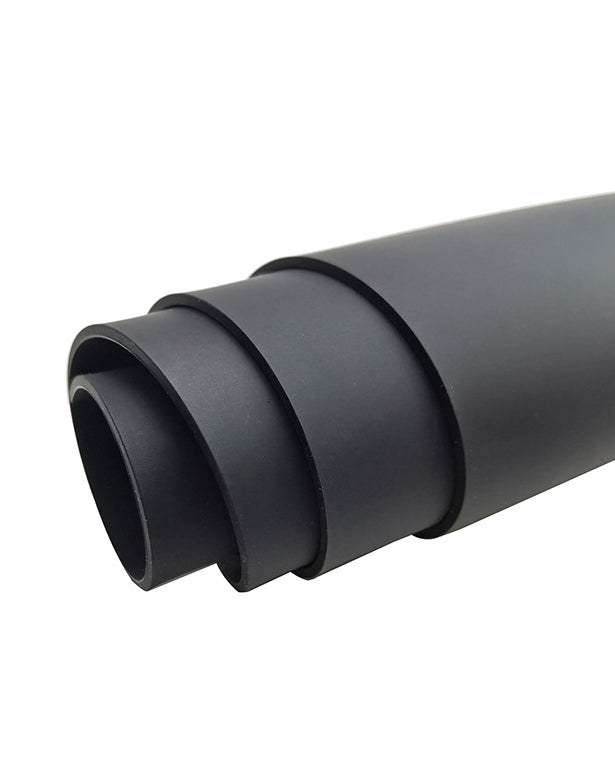


Among the world's four major industrial raw materials, rubber is the only flexible polymer material. Rubber is not an energy raw material, nor is it a rigid structure, but it has irreplaceable uniqueness and coverage of the whole industrial chain, and has become a rigid material for industrial production, whether it is daily necessities or technology industry. The following content can understand the core competitiveness of rubber and why it has become one of the four major industrial raw materials.

1. Rubber has a number of unique properties, and the essence of rubber is the uniqueness of its performance combination in the field of materials:
The importance of high resilience for industry
The elastic deformation ability of rubber can reach 100% to 1000%, and it can quickly return to its original state after deformation. This characteristic makes it the core material for sealing, shock absorption, and cushioning, in the automobile manufacturing industry, construction industry, and machinery and equipment, while the metal is too rigid and the plastic is not elastic enough, and it cannot replace rubber at all.
Environmental Adaptability and Chemical Stability:
Rubber can withstand extreme environmental tests, natural rubber and synthetic rubber can work stably in the temperature range of -50°C~260°C, and can resist the erosion of oil, acid and alkali, ozone and other media. Extreme environment rubber maintains performance over time.
processing difficulty and morphological plasticity
Rubber can be made into any form such as film, coil, seal, and special-shaped parts through vulcanization, extrusion, and molding, which can meet various needs from micron-sized electronic components to tens of meters long infrastructure coils. Moreover, it can be compounded with fibers, metals, plastics and other materials to form functional superimposed composite materials, greatly expanding application scenarios and boundaries.
Super implicit rigid performance
Rubber is an excellent electrical insulation material, with a breakdown voltage of up to 10~30kV/mm, and is widely used in wire and cable sheaths and motor insulation; At the same time, it has a high friction coefficient and strong wear resistance, such as the anti-slip pattern of tires and the wear-resistant surface layer of industrial conveyor belts, which can ensure safety and extend the service life, which are hidden characteristics of industrial production.
2. The whole industrial scene should be from life to cutting-edge technology
The application of rubber covers almost all industrial fields, from daily consumption to national strategic industries, forming a dependence pattern of "difficult to produce without rubber":
Importance to the automobile manufacturing industry, tires account for more than 60% of the world's rubber consumption, and tires for automobiles, high-speed railways, airplanes, and ships all require high elasticity and wear resistance of rubber;
Shock-absorbing components, seals, and oil pipes of transportation equipment also need rubber as raw materials to ensure driving stability and equipment life.
Infrastructure protection and energy sealing
In the construction industry, bridge expansion joints, tunnel waterproofing boards, and building sealants are all made of rubber to resist environmental erosion and structural deformation.
In the field of new energy, electric vehicle battery pack seals, shock absorbing pads for wind power equipment, and flexible protective layers for photovoltaic power stations rely on the temperature resistance, insulation, and lightweight characteristics of rubber.
High-end manufacturing and electronic precision fields
Aerospace engine seals and cabin sound insulation and shock absorbing materials need rubber to withstand high temperature, high pressure and extreme temperature differences;
Electronic appliances: Waterproof seals for mobile phones and computers, elastomers for keyboard keys, and wire insulation sheaths, relying on the precision molding and stable performance of rubber.
Daily necessities and medical industry demand
Everyday products need to take advantage of the flexibility and tightness of rubber;
The medical field requires the biocompatibility and sterility properties of rubber, which is an important part of medical safety.

3. The value of global industrial operation, rubber can become the four major industrial raw materials, because of the performance characteristics, complete industrial chain support and strategic resource attributes:
Rubber resources are guaranteed in both natural and synthetic ways:
Natural rubber comes from rubber trees and is a renewable resource, suitable for scenarios with high elasticity and biocompatibility requirements.
Synthetic rubber is made of petroleum as raw material and can be produced on a large scale, which can accurately control the performance and make up for the supply gap and performance limitations of natural rubber. Dual-track supply makes rubber resources stable and will not affect industrial production due to a single resource shortage.
The linkage of the industrial chain forms multi-industry synergy:
The upstream of the rubber industry is connected to agriculture and petrochemical industry, and the midstream involves rubber processing, additives production, and dozens of industries such as transportation, infrastructure, electronics, and medical care in the downstream. The technological upgrade of one link can drive product iteration in many downstream fields and is the linkage hub of the industrial industry chain.
Key strategic material attributes
In strategic fields such as aerospace, national defense, and new energy vehicles, high-end rubber materials are one of the important technologies. The independent and controllable rubber industry can ensure the supply chain security of key equipment, which has become an important strategic value of industrial core raw materials.
4. The key to rubber is to change raw materials because of its success:
Limitations of Natural Rubber: Early rubber relied entirely on natural rubber trees, and its production was limited by geography and climate, and the output was unstable to meet the needs of explosive industrial growth.
The Rise of Synthetic Rubber: The strategic need for rubber during the two world wars, particularly during World War II, led to the rapid development of the synthetic rubber industry. Through petrochemical technology, humanity is able to mass-produce synthetic rubber with specific properties. This frees rubber raw materials from the shackles of nature, achieves a stable and diversified supply, and truly becomes an industrial commodity that can be produced on demand like steel and oil.
5. Industrial economy and strategic value: As an important strategic material, the supply chain of rubber is related to the national economy and people's livelihood and national security.
Huge industrial chain: From rubber planting, synthetic manufacturing, to tire and various product processing, the rubber industry has formed a huge global industrial chain, creating huge economic value and countless jobs.

Rubber has an important strategic position due to its irreplaceable physical properties, wide application range, and stable and diversified raw material supply, so it has the core value of industrial raw materials. Rubber allows the entire industrial system to operate flexibly, efficiently and safely. Therefore, rubber, along with steel, oil and coal, has become the four major industrial raw materials.