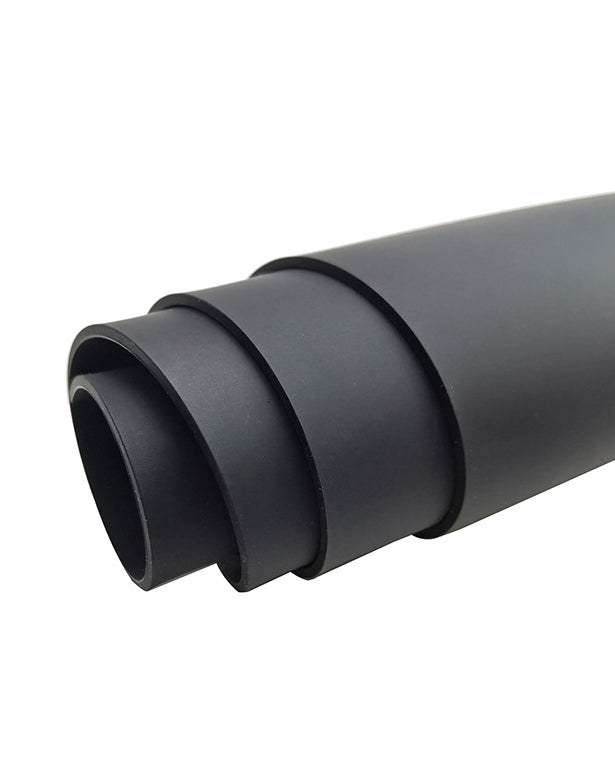


The most significant advantage of EPDM rubber sheet lies in its weather resistance and aging resistance. It can withstand long-term erosion from ultraviolet rays, ozone, and extreme temperatures ranging from -40°C to 150°C. Even in outdoor exposure or harsh cold environments, it is unlikely to crack or harden. Its chemical resistance is also quite excellent, being able to effectively resist water and weak acids and bases. Its oil resistance is relatively poor, and it is prone to swelling when in contact with oil-based substances such as engine oil and diesel. This characteristic makes EPDM particularly suitable for outdoor applications, such as sealing strips for building doors and windows, rubber strips for car windshield wipers, and sealing rings for photovoltaic power stations. Choosing EPDM is almost always the right choice for maintaining stability in natural environments in these areas.
Neoprene rubber sheet, on the other hand, excels in oil resistance and flame retardancy. When exposed to gasoline, lubricating oil, and other oil-based media, chloroprene rubber maintains good structural stability and is less likely to deform. At the same time, it has a certain degree of flame retardancy, and it is less likely to continue burning when exposed to fire, and it has good wear resistance and adhesion. However, the weather resistance of chloroprene rubber is slightly weaker than that of EPDM, and it may age and change color over time when used outdoors for a long period. Therefore, chloroprene rubber is more suitable for scenarios that come into contact with oils and require safety, such as engine oil pipes, fuel supply hoses in gas stations, flame-retardant conveyor belts, and rubber products that require adhesion and fixation.
How to choose? Consider three dimensions:
The first dimension is the usage environment: For outdoor open-air scenarios such as courtyard fences sealing and outdoor equipment protective covers, EPDM is the preferred choice. For indoor environments that come into contact with oils, such as machine lubrication system pipelines and kitchen exhaust fan sealing parts, chloroprene rubber is more suitable.
The second dimension is the performance priority: If the most important factor is long-term durability and non-aging, EPDM is the first choice. If oil resistance and flame retardancy are mandatory requirements, even at the expense of a little weather resistance, CR should be selected.
The third dimension is the cost budget: Under the same specifications, the price of EPDM is usually 10%-20% lower than that of CR. If the requirements do not involve oil resistance and flame retardancy, choosing EPDM can reduce costs.