

-
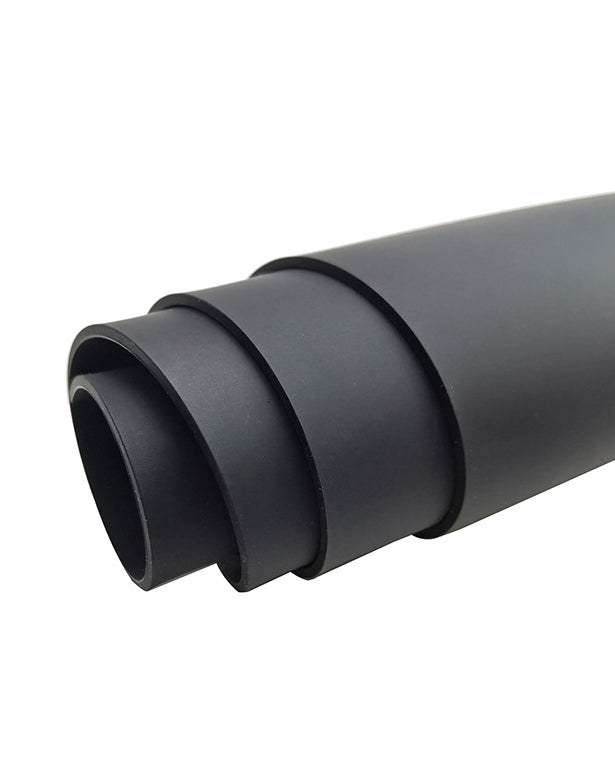
Scope of application: Nitrile Butadiene Rubber (NBR) products, intended for oil-resistant and fuel-resistant environments.
-
Technical features:
-
Resistant to mineral oil, aviation fuel (e.g., JP-4, JP-5), and hydraulic oil. Designed for scenarios involving contact with petroleum-based liquids such as fuel, lubricating oil, and hydraulic oil—for example, aerospace engine seals, fuel line connections, and industrial hydraulic system seals. Their oil resistance is verified through rigorous liquid immersion tests to ensure sealing performance is maintained after long-term contact with oil-based media. The balance between oil resistance and low-temperature flexibility is achieved by adjusting the acrylonitrile (ACN) content: high ACN content (e.g., 35%-45%) enhances oil resistance but reduces low-temperature performance, while low ACN content (e.g., 20%-30%) has the opposite effect. For instance, the typical formulation of Grade 60 material can maintain elasticity in the range of -50°F (-45°C) to +220°F (104°C).
-
Hardness range: 30-80 Shore A; tensile strength: ≥10.3 MPa; low-temperature embrittlement temperature: ≤-40°C. For example, Grade 60 indicates a hardness of 60±5 Shore A.
-
Partially replaced by MIL-PRF-6855, but still used as a supplementary standard in the field of nitrile rubber.
-
Chemical resistance:
- Liquid immersion test: In accordance with ASTM D471, the material must meet performance requirements after immersion in the following typical media:
- IRM 903 oil (simulating engine oil): 70 hours @150°C, with volume change ≤±10% and hardness change ≤±10 Shore A.
- ASTM Reference Fuel C (gasoline simulant): 70 hours @23°C, with volume change ≤-15% to 0% and tensile strength loss ≤30%.
- Dry shrinkage test: Drying treatment after immersion to ensure no excessive shrinkage of the material causes seal failure.
- Liquid immersion test: In accordance with ASTM D471, the material must meet performance requirements after immersion in the following typical media:
-
Low-temperature performance: Passing the flat-bend low-temperature test (replacing the standard impact test), the material must be free from brittleness and cracking at -59°C.
-
Low-temperature compression set: When compressed at -25°C for 72 hours, the deformation shall be ≤70%.
-
-
3M double-sided adhesive silicone sheet Processed silicone rubber gasket Rubber insulation sealing pad Workbench table pad
3M double-sided adhesive silicone sheet Processed silicone rubber gasket Rubber insulation sealing pad Workbench table pad
常规价格 ¥17.00 促销价 ¥8.00 -
A-Type Sealing Strip EPDM Foamed Rubber Sealing Strip

A-Type Sealing Strip EPDM Foamed Rubber Sealing Strip
¥3.00 -
Adhesive Backed Custom Profile Closed Cell Seal

Adhesive Backed Custom Profile Closed Cell Seal
常规价格 ¥1.20 促销价 ¥0.80