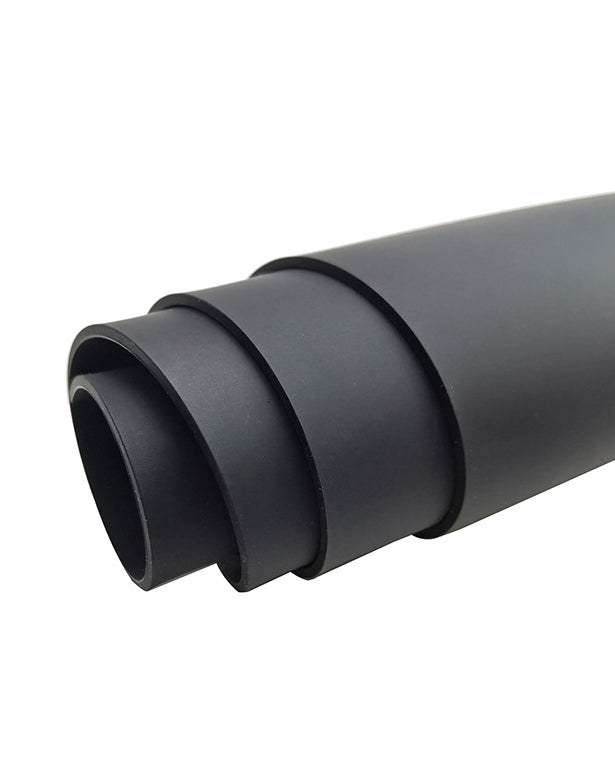


In modern industrial production and daily life, rubber seals can effectively prevent the leakage of media such as gases, liquids, and dust, ensure the normal operation of equipment, and reduce energy waste and environmental pollution. If rubber seals fail, they may lead to equipment failures, cause significant economic losses, and even trigger safety accidents. For instance, in chemical production, seal failure may result in the leakage of toxic media, endangering the lives of personnel.
Rubber seals have an extremely wide range of applications, covering multiple industries. In the field of industrial equipment, they are often used in the dynamic and static sealing parts of equipment such as compressors, pumps, valves, and reaction kettles; in the automotive industry, rubber seals are indispensable—from crankshaft oil seals and valve oil seals of engines, to gaskets in gearboxes, and further to weatherstrips for vehicle windows; in the household appliance sector, components like the drum sealing rings of washing machines, door gaskets of refrigerators, and pipeline seals of air conditioners also all rely on rubber seals to achieve sealing functions, thereby enhancing the performance and service life of household appliances.
Rubber possesses excellent wear resistance, which stems from its material composition and structure. Rubber itself has a certain degree of elasticity; when subjected to friction, it can buffer frictional impact through deformation. Meanwhile, reinforcing agents such as carbon black and silica are added to some rubber materials to further improve their wear resistance. For example, nitrile rubber (NBR) seals used in petrochemical equipment can maintain good sealing performance even after long-term friction in contact with lubricating oil and impurities, with a service life of up to several thousand hours.
Different types of rubber seals possess targeted corrosion resistance. Nitrile rubber (NBR) has excellent oil resistance and can resist the erosion of media such as mineral oils, animal oils, and vegetable oils; fluororubber (FKM), on the other hand, exhibits good resistance to strong acids, strong alkalis, and high-temperature highly corrosive media, allowing it to be used stably in highly corrosive environments like the chemical and pharmaceutical industries; ethylene propylene diene monomer rubber (EPDM) stands out for its outstanding weather resistance and ozone resistance, performing well in outdoor equipment or sealing scenarios with long-term exposure to the atmosphere, effectively preventing seal failure caused by media corrosion.
The core characteristic of rubber seals is their excellent elasticity. Their molecular chains have good flexibility, enabling them to undergo significant deformation under external force and quickly return to their original shape once the external force is removed. This elasticity allows the seals to fit tightly against the sealing surface; even if there are minor irregularities on the sealing surface, the seals can fill the gaps through self-deformation to achieve reliable sealing. For example, automotive door weatherstrips rely on elasticity to fit tightly between the door and the vehicle body, effectively isolating external noise, rainwater, and dust, and ensuring a comfortable interior environment.
In large industrial compressors, rubber seals are used for sealing between the piston rod and the cylinder to prevent the leakage of compressed gas, ensuring the stable discharge pressure and efficiency of the compressors. For the blast furnace blowers of a steel enterprise, after adopting fluororubber (FKM) seals, the seal failure cycle was extended from the original 3 months to 12 months under the operating conditions of high temperature (150°C) and high pressure (0.8MPa), significantly reducing equipment maintenance costs and downtime.
The crankshaft oil seal of an automobile engine is a key sealing component, made of a composite material of nitrile rubber (NBR) and polytetrafluoroethylene (PTFE). It can not only resist the erosion of engine oil but also adapt to the friction generated by the high-speed rotation of the crankshaft (with a rotational speed of up to 6000 rpm). Data from an automobile manufacturer shows that after using high-quality crankshaft oil seals, the engine oil leakage rate decreased from 0.5% to 0.05%, greatly improving the reliability of the engine.
The drum sealing ring of a washing machine is made of ethylene propylene diene monomer rubber (EPDM), which has good elasticity and water resistance, allowing it to be used in a long-term humid environment without being prone to aging. At the same time, the special structural design of the sealing ring can effectively prevent water leakage during the washing process. The sealing ring of a washing machine from a certain home appliance brand has a service life of up to 8-10 years, which is basically consistent with the overall service life of the washing machine.
Rubber seals are a key link in the application industry chain. Choosing a suitable rubber product supplier ensures stable and reliable product quality; technical capabilities are crucial: Pexxon Rubber, a rubber product supplier, has over 20 years of experience in product R&D, mold design and manufacturing, and testing capabilities. It can develop new types of seals according to customer needs and solve sealing problems under special operating conditions; a reasonable production planning and inventory management system ensures on-time delivery; in addition, it provides first-class after-sales service, which can promptly respond to customers' quality feedback, offer maintenance and replacement services, and assist customers in solving problems encountered during use.
With its excellent wear resistance, corrosion resistance, elasticity, and sealing performance, rubber seals play an irreplaceable role in numerous fields such as industrial equipment, automobiles, and household appliances. They are key components that ensure the normal operation of equipment and improve product performance and service life; without high-quality rubber seals, many industrial production activities and daily-use equipment would be unable to operate or be used normally. As the level of industrial automation rises and requirements for product performance increase, dependence on rubber seals will further deepen.
In the future, the rubber seal industry will develop in the directions of environmental friendliness, high performance, and intelligence. In terms of environmental protection, degradable rubber materials will be developed to reduce environmental pollution caused by waste seals; in terms of high performance, the resistance of seals to high and low temperatures, high pressure, and strong corrosion will be further enhanced to adapt to more extreme operating conditions—for example, developing seals that can be used in ultra-low temperature environments (-200°C) or high-temperature environments above 300°C; in terms of intelligence, sensor technology will be integrated to develop intelligent seals, which can monitor the sealing status in real time, provide early warnings of seal failure risks, and enable predictive maintenance of equipment.
It is expected that rubber product suppliers will increase investment in technological R&D, keep pace with industry development trends, and continuously launch environmentally friendly and high-performance rubber seal products to meet the increasingly diversified and high-standard needs of downstream enterprises. At the same time, it is recommended that suppliers optimize supply chain management, improve the stability of raw material procurement and cost control capabilities, and reduce the risk of product price fluctuations; strengthen cooperation and communication with downstream enterprises, gain in-depth insights into customers’ actual needs and application scenarios, and provide more precise customized services and technical solutions; furthermore, they should attach importance to the construction of after-sales service systems, improve the speed and quality of service responses, and establish long-term and stable customer cooperative relationships to jointly promote the sustainable and healthy development of the rubber seal industry.