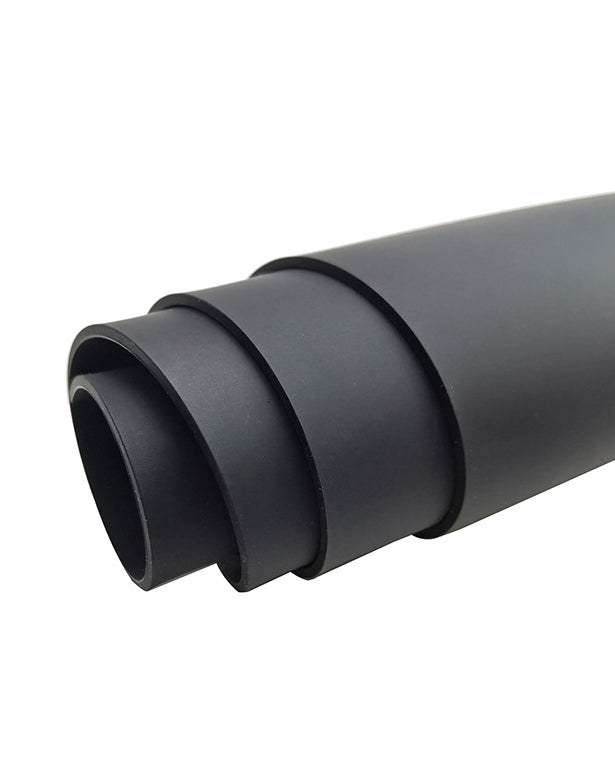


SAE AMS3301K-2024 is an aerospace material specification published by the Society of Automotive Engineers (SAE). It establishes technical requirements for silicone rubber (MQ/VMQ) elastomers and is applicable to non-critical sealing components in general industrial scenarios.
I. Material Type and Application Scope
Material Characteristics
This standard covers elastomers based on silicone rubber (MQ/VMQ) with a hardness range of 35-45 Shore A (tested per ISO 48). It combines elasticity and moderate rigidity, making it suitable for scenarios requiring resistance to high and low temperatures as well as aging.
This standard covers elastomers based on silicone rubber (MQ/VMQ) with a hardness range of 35-45 Shore A (tested per ISO 48). It combines elasticity and moderate rigidity, making it suitable for scenarios requiring resistance to high and low temperatures as well as aging.
Application Scenarios
- Forms of manufacture: Sheets, strips, tubes, extrusions, and molded parts (e.g., industrial equipment gaskets, non-critical seals).
- Prohibited scenarios: Explicitly prohibited for critical sealing components in aerospace applications, such as molded rings, compression seals, and O-rings.
- Temperature range: The reference operating temperature is -85°F to +400°F (-65℃ to 204℃), significantly higher than general industrial standards (e.g., intermittent 95℃ in EN 681-1), making it suitable for high-temperature environments.
II. Core Performance Requirements and Testing Methods
Basic Physical Properties
- Hardness: 35-45 Shore A (ISO 48), ensuring tight contact between the material and the mating surface during assembly.
- Compression set: Tested per ASTM D395, with a new requirement of ≤25% under 70-hour @ high-temperature conditions to verify elastic recovery after long-term compression.
- Tensile strength and elongation at break: Specific values are not specified, but compliance with ISO 37 testing is required to ensure the material’s resistance to tearing and deformation.
Environmental Adaptability
- Hot air aging: Must pass high-temperature stability testing (specific temperature and duration not disclosed) to simulate performance degradation in long-term high-temperature environments.
- Ozone resistance test: Referencing ISO 1431-1, no cracks shall occur after exposure to ozone at a specific concentration, suitable for outdoor or high-ozone environments.
- Low-temperature performance: Specific indicators are not specified, but the inherent properties of silicone rubber can meet the requirements of low-temperature applications at -65℃.
Chemical Compatibility
- The standard does not detail specific requirements for immersion testing in oils or chemical media. However, the chemical inertness of silicone rubber makes it suitable for most industrial scenarios (e.g., resistance to mineral oils and synthetic oils).
III. Testing System and Compliance Requirements
Three-level Testing System
- Pre-production testing: Comprehensive performance verification, covering all physical and environmental test items, shall be conducted every 5 years.
- Acceptance testing: 6 core indicators, including hardness and tensile strength, must be inspected for each batch to ensure batch consistency.
- Periodic review: Technical reviews shall be conducted every 5 years, which may trigger standard revisions.
Material Restrictions
- The use of reclaimed vulcanized rubber compounds is prohibited. Original batch records must be traceable to ensure material quality stability.
IV. Comparison with Other Standards
Temperature Range
The temperature range of SAE AMS3301K-2024 (-65℃ to 204℃) is significantly wider than that of EN 681-1 (cold water ≤50℃, intermittent high temperature ≤95℃), making it more suitable for extreme temperature conditions.
The temperature range of SAE AMS3301K-2024 (-65℃ to 204℃) is significantly wider than that of EN 681-1 (cold water ≤50℃, intermittent high temperature ≤95℃), making it more suitable for extreme temperature conditions.
Application Orientation
- SAE standard: Focuses on aerospace and high-temperature industrial scenarios, such as engine components and high-temperature pipeline seals.
- EN standard: Focuses on water and drainage systems, emphasizing water resistance, chemical erosion resistance (e.g., chlorinated water, sewage), and drinking water safety certifications (e.g., KTW).