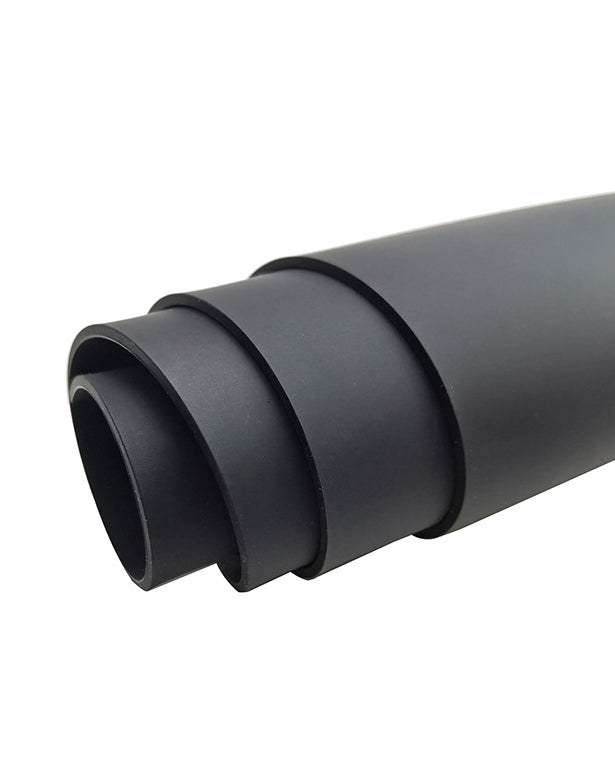


What is a rubber strip? Let's find out through rubber products supplier Pexxon Supper. The rubber strip family has many different members, and only by choosing the right one can your needs be met. Now let's take a look at the distinct capabilities of rubber strips made from different materials!
Natural rubber strips are known for their super elasticity. They can quickly rebound even after being pulled tens of thousands of times. They are commonly used in the seal grooves of car doors and luggage compartments. However, their biggest drawbacks are their vulnerability to sunlight and oil. If exposed to sunlight for a long time, they tend to crack, making environments like kitchens and engine compartments unsuitable for them.
Nitrile rubber strips are characterized by their oil resistance. They are used in oil pipeline interfaces and sealing rings of range hoods, and can remain intact even after being soaked in gasoline or engine oil for days. But what they fear most is cold—they become brittle at low temperatures, so they are not suitable for outdoor use in northern winters.
Silicone rubber strips excel in temperature resistance. They can work in environments as low as -60°C and survive in temperatures as high as 200°C. However, they are most commonly found in maternal and infant products. Non-toxic, odorless, and antibacterial, they are used, for example, in the sealing rings of baby bottles.
EPDM (Ethylene Propylene Diene Monomer) rubber strips are outdoor experts. They are not afraid of ultraviolet rays, wind, snow, or even invisible ozone, which is why they are often used in doors, windows, and car windshield wipers. Their excellent anti-aging ability allows them to function easily for 20 to 30 years, though their elasticity is not as good as that of natural rubber strips.
In summary, if elasticity is your priority, go for natural rubber; if you need oil resistance, choose nitrile rubber; use silicone for high and low temperature environments; and opt for EPDM for outdoor use requiring anti-aging and weather resistance.