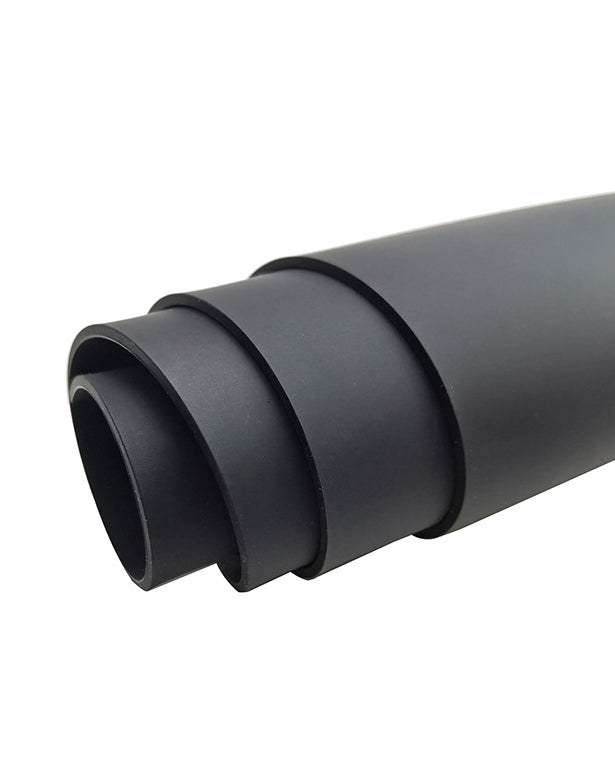


In the field of precision electronic manufacturing, as the industry evolves toward miniaturization, high performance, and high reliability, the hermeticity of electronic component packaging and the stability of equipment assembly directly determine product lifespan and user experience. According to survey data from the IPC Association Connecting Electronics Industries, more than 18% of early failures in electronic products are associated with the failure of internal protective materials. EPDM, with its weather resistance, hermetic sealing properties, cushioning and shock absorption capabilities, and electrical insulation performance, has become an essential material in electronic component packaging and equipment assembly. Its saturated backbone structure delivers ultra-high stability.
1. Core Properties of EPDM
Adaptability of EPDM Material
-
Aging ResistanceThe minimal double-bond structure in EPDM molecules gives it excellent resistance to ozone and ultraviolet (UV) radiation. It can maintain elasticity and sealing performance even in long-term outdoor applications, which is critical for outdoor electronic devices such as solar inverters and communication base station equipment.
-
Wide Temperature Tolerance RangeEPDM gaskets can retain functional integrity across an extreme temperature range of -50°C to 150°C, covering the operating environment requirements of most electronic devices. They are suitable for applications from frigid to tropical regions.
-
Electrical Insulation PerformanceAs a natural insulating material, EPDM features high resistivity and a low dielectric constant. It does not interfere with the normal operation of electronic equipment and eliminates the risk of short circuits that may be caused by metal seals.
Balanced Chemical Stability and Mechanical Properties of EPDM
During the electronic manufacturing process, components and equipment may come into contact with various chemicals, including cleaning agents, lubricants, and process chemicals. EPDM exhibits excellent resistance to polar solvents, acids, alkalis, and water vapor, while maintaining essential mechanical properties:-
Low Compression SetAfter prolonged compression, EPDM gaskets can still recover their original shape, ensuring a long-term sealing effect. This is particularly crucial for electronic equipment that requires maintenance-free operation for many years.
-
Balanced Flexibility and ElasticityEPDM materials can be customized across a range of hardness levels. They can not only meet the precise sealing requirements of delicate components but also fulfill the structural support needs in equipment assembly.
Temperature Resistance Stability and Working Condition Adaptability of EPDM
Electronic equipment faces significant temperature difference challenges during production, transportation, and operation—from subzero low-temperature environments to high-temperature heat generation during device operation—placing stringent demands on the temperature resistance of protective materials. EPDM gaskets offer a long-term operating temperature range of -40°C to 120°C, with specially formulated products extending this to -55°C to 150°C. They exhibit exceptional weather resistance and anti-aging properties in medium and low-temperature environments.This wide temperature range stability ensures that in component packaging, EPDM gaskets maintain structural integrity and performance stability even when exposed to chip heat generation or extreme temperature fluctuations in outdoor equipment, preventing seal failure caused by thermal expansion and contraction of the material.Sealing and Protective Capabilities of EPDM
One of the core requirements for electronic component packaging is to isolate external contaminants such as moisture, dust, and impurities. With a dense structure featuring a 85%-95% closed-cell ratio, EPDM gaskets form an efficient sealing barrier, effectively preventing the intrusion of moisture, dust, and harmful gases.Their excellent compression and rebound properties allow adaptation to different gap sizes. In equipment assembly, they fill housing joints and component clearances, achieving dustproof and waterproof protection of IP67 and above rating. Meanwhile, EPDM materials exhibit outstanding resistance to ultraviolet (UV) radiation, ozone, and oxidation, maintaining stable sealing performance even after long-term exposure to complex environments and extending the service life of electronic equipment.Shock Absorption and Noise Reduction Functions of EPDM
Most electronic components feature precision structures and are vulnerable to damage from transportation vibrations or operational shocks. The cushioning and shock-absorbing properties of EPDM gaskets thus serve as a critical protective measure.Its closed-cell structure converts kinetic energy into thermal energy by compressing the air within the cells upon impact: a 1mm-thick EPDM foam sheet can absorb more than 70% of impact energy. Meanwhile, the viscoelastic damping properties of its polymer chains effectively suppress vibrations in the frequency range of 50-2000Hz (commonly generated by fan and hard disk operation), reducing the impact of vibration on component precision.In equipment assembly, EPDM gaskets isolate motor vibrations and reduce abnormal noise caused by component friction. For instance, EPDM gaskets are used at the connection between the flight controller and fuselage of DJI drones, as well as inside GoPro action cameras, to achieve vibration protection.Electrical Insulation and Flame Retardant Properties of EPDM
Electrical insulation protection and fire safety are of paramount importance in electronic manufacturing. EPDM gaskets boast a dielectric breakdown strength of 15-25kV/mm and a volume resistivity of 10¹²-10¹⁵Ω·cm, which can effectively isolate high-voltage circuits from sensitive components and prevent the risks of arc breakdown and short circuits.In terms of flame retardancy, EPDM materials can meet the UL94 V-0 flame retardant standard without the addition of large quantities of flame retardants, with a flame retardant thickness threshold of only 3mm. It combines environmental friendliness with high safety and complies with the requirements of environmental regulations such as RoHS and REACH.High-End Integration Potential of EPDM
With the development of multifunctional electronic equipment, EPDM gaskets have achieved the integration of multiple functions such as cushioning, shielding, and thermal conductivity.By adding conductive fillers (e.g., silver-plated copper powder), conductive EPDM gaskets can be manufactured, which deliver an electromagnetic shielding effectiveness of 60-90dB in the frequency range of 30MHz-10GHz, solving the problem of high-frequency electromagnetic interference in 5G equipment. The addition of fillers such as boron nitride and aluminum oxide can increase the thermal conductivity to 1-3W/(m·K), enabling efficient heat transfer between chips and heat sinks.This multifunctional integration characteristic allows EPDM gaskets to meet multiple requirements in packaging simultaneously, simplifying the structural design of equipment.2. EPDM Application Scenarios
Precision Protection and Stress Buffering for Circuit Packaging
Chip packaging requires a balance of heat dissipation, insulation, and mechanical protection. As a cushioning and insulating material, EPDM gaskets are widely used between chips and substrates.Their ultra-thin design of as low as 0.05mm can meet the miniaturization requirements of chip packaging, filling micro-irregularities between chips and heat sinks. This not only ensures an unobstructed heat dissipation path but also buffers mechanical stress during the packaging process to prevent chip cracking. In 3D IC chip stacking technology, EPDM materials are being evaluated by companies such as TSMC for interlayer filling to address stress buffering and sealing issues in stacked structures.High Temperature Resistance and Corrosion Protection for Power Supplies and Energy Storage
The packaging of energy storage devices such as power modules and batteries faces challenges such as high temperatures and chemical corrosion. The temperature and chemical resistance of EPDM gaskets make them an ideal choice for these applications.In power module packaging, EPDM gaskets isolate the primary high-voltage side from the secondary low-voltage side, preventing electrolyte leakage from corroding circuits. In the Battery Management System (BMS) of new energy vehicles, they are used for the insulation and isolation of high-voltage sampling circuits to resist chemical erosion from battery electrolytes. Their temperature resistance range of -40°C to 120°C can adapt to temperature changes during battery charging and discharging, ensuring the long-term stability of the packaging structure.Lightweight Design and Adaptability for Electronic Component Packaging
Miniature electronic devices such as smart wearables and IoT sensors have extremely high requirements for the lightweight and flexibility of packaging materials. EPDM gaskets feature a low density, being 30%-50% lighter than traditional rubber materials, and boast excellent flexibility and customizable molding capabilities. They can be precision die-cut into complex shapes with a positional accuracy of ±0.1 mm, making them suitable for the tiny installation spaces of sensors.In the packaging of wearable devices, EPDM gaskets balance skin contact safety with sealing protection, preventing sweat from infiltrating the internal components. Meanwhile, their flexible properties enhance the wearing comfort of the devices.Sensor Packaging
Modern electronic devices integrate a large number of environmental sensors (temperature, humidity, pressure). These sensitive components need to be isolated from the external environment, while not completely blocking the measured media. Through precise sealing design, EPDM gaskets achieve this "selective isolation", protecting the core circuits of sensors while allowing specific media to contact the sensing elements.Power Module Packaging
In electric vehicles and renewable energy systems, high-power electronic modules generate substantial heat and are simultaneously exposed to vibration and thermal cycling stress. EPDM gaskets not only provide environmental sealing but also serve as carriers for thermal interface materials (TIMs). Combined with thermally conductive fillers, they realize the dual functions of heat dissipation and sealing.LED Packaging Protection
LED units in outdoor lighting and display screens need to resist moisture intrusion for a long time; otherwise, it will lead to accelerated light decay and shortened service life. EPDM gaskets form a reliable sealing layer between the lens and the substrate. Their light transmittance and yellowing resistance properties make them particularly suitable for optoelectronic packaging.Waterproof Connector Sealing
From consumer electronic products to industrial control equipment, waterproof rating has become a key indicator. EPDM gaskets form elastic sealing rings at positions such as USB ports and power sockets, achieving IP67 or even IP68 protection ratings and ensuring that liquids cannot penetrate into the interior of the equipment.Board-to-Board Connector Buffering
In the stacked structure of multi-layer circuit boards, EPDM gaskets not only provide sealing but also alleviate assembly stress and differences in thermal expansion, preventing connector failure caused by mechanical stress.
3. Applications of EPDM Gaskets in Equipment Assembly
Sealing Protection and Structural Reinforcement
The core requirements for equipment housing assembly are sealing and structural stability. EPDM gaskets can be manufactured into various cross-sectional shapes such as round, square, and D-shaped, and fixed at housing joints with adhesive backing or adhesives to achieve dustproof and waterproof sealing. For example, the frame joints of dustproof and waterproof mobile phones, as well as the connections between the screen and body of laptops, all use EPDM gaskets to fill gaps, ensuring the normal operation of equipment in complex environments. Meanwhile, the elastic properties of EPDM gaskets can compensate for assembly errors, alleviate structural stress, and prevent housing deformation and cracking.Chassis and Cover Plate Sealing
Servers, industrial computers, medical monitoring equipment, and other devices require strict control of the internal environment. EPDM gaskets form a continuous sealing line along equipment joints, blocking the intrusion of dust and liquid while allowing necessary heat dissipation airflow.Display and Housing Integration
In touchscreen devices, the tiny gaps between the display and the housing pose a dual challenge to aesthetics and protection. Ultra-thin EPDM gaskets (with a thickness as low as 0.25mm) provide an almost invisible seal here, while absorbing impact energy to protect brittle glass components.Vent and Filter System Sealing
Forced air-cooled equipment needs to balance airflow and protection requirements. Reinforced EPDM foam gaskets form a labyrinth seal at vents, allowing air circulation while filtering particulate matter.Precise Regulation for Modular Design
Removable Panel Sealing
Panels requiring frequent opening and closing, such as those in test equipment and communication base stations, adopt EPDM foam gaskets fixed in grooves. These gaskets can maintain compression rebound and sealing performance even after repeated disassembly and assembly.Inter-Module Sealing
In stacked designs, different functional modules require electrical connection and environmental isolation. Custom EPDM gaskets are integrated with connectors in a unified design, achieving assembly efficiency of "plug-and-seal".The heat dissipation systems of electronic equipment need to balance efficient heat conduction and thermal insulation in sensitive areas. Through formula adjustment, EPDM gaskets can achieve dual functions:- Insulating EPDM has a thermal conductivity of only 0.03-0.06W/(m·K), used to isolate heat-generating components from heat-sensitive areas (e.g., between batteries and motherboards).
- Thermally conductive EPDM, by adding ceramic fillers, improves thermal conductivity while maintaining insulation properties. It fills the gaps between chips and heat sinks, reducing the chip junction temperature by 8-15°C.
In server chassis assembly, thermally conductive EPDM gaskets are widely used in the thermal interface of heat-generating components such as CPUs and graphics cards, ensuring the long-term high-load operation of equipment.Electromagnetic Shielding and Interference Resistance
The development of communication technology has made EMC (Electromagnetic Compatibility) a key challenge in equipment assembly. Conductive EPDM gaskets form a continuous conductive network through their surface conductive layer, which can reflect and absorb electromagnetic waves and create a Faraday cage at equipment gaps, achieving a shielding effectiveness of 40-90dB and effectively preventing electromagnetic leakage and external interference. In the assembly of 5G base station AAU modules and the RF areas of smartphones, EPDM shielding gaskets fill housing gaps to ensure stable signal transmission of equipment in high-frequency environments.Modularization for Improved Production Efficiency
The modular assembly model in electronic manufacturing requires EPDM gaskets to have customizable processing capabilities, which they fully meet. Manufacturers can supply roll-form kiss-cut gaskets, facilitating quick peel-and-use on automated production lines and reducing assembly processes. They also support perforation and crease designs, which can be folded into 3D structures to adapt to the installation requirements of complex modules. This customized service not only improves material utilization and reduces waste but also simplifies the assembly process, boosts production efficiency, and lowers the manufacturing costs for enterprises.4. Material Formulation and Performance Customization
Conductive EPDM
By adding carbon black, metal particles, or conductive polymers, conductive EPDM gaskets with a volume resistivity of 10²-10⁶Ω·cm can be prepared. They are used for electromagnetic shielding or electrostatic dissipation, and are particularly suitable for EMI-sensitive equipment.Flame-Retardant EPDM
Safety standards for electronic equipment typically require materials to meet the UL94 V-0 rating. By adding flame retardants such as aluminum hydroxide and magnesium hydroxide, EPDM gaskets can achieve self-extinguishing properties without releasing toxic gases.Thermally Conductive EPDM
In critical heat dissipation areas, thermally conductive fillers such as boron nitride and aluminum oxide are added to the EPDM matrix. This makes the gaskets combine sealing and thermal management functions, with a thermal conductivity of up to 1-5W/mK.Temperature Selection
- Standard EPDM gaskets are selected for conventional scenarios with a temperature range of -40°C to 120°C.
- High-temperature resistant formulations with a maximum temperature resistance of 150°C are available for high-temperature scenarios.
- Products optimized for low-temperature flexibility are preferred for low-temperature environments.
Protection Selection
- EPDM foam gaskets with a closed-cell ratio of ≥90% are selected for applications with high dustproof and waterproof requirements (IP67 and above).
- Standard molded EPDM gaskets can be used for general sealing scenarios.
Function Selection
- Conductive filler-modified EPDM gaskets are selected for electromagnetic shielding scenarios.
- Ceramic-filled thermally conductive EPDM is chosen for heat dissipation requirements.
- Products with high-resistivity formulations are preferred for insulation scenarios.
Precision Selection
- Ultra-thin precision die-cut gaskets with a thickness of 0.05-1mm are used for the packaging of miniature components.
- For equipment housing assembly, standard-specification gaskets with a thickness of 1-10mm can be selected according to gap sizes.
Design and Process Innovation
Miniaturized Precision Gaskets
Lithography and laser cutting technologies enable EPDM gaskets to achieve a dimensional accuracy of ±0.05mm, meeting the requirements of microelectronic packaging, with a minimum cross-sectional diameter of up to 0.3mm.Integrated Molding of Complex Cross-Sections
By combining extrusion and molding processes, multifunctional gaskets with mounting buckles and guiding structures can be produced, simplifying assembly procedures.Adhesive Integrated Solutions
Adhesive-backed EPDM gaskets are pre-coated with pressure-sensitive adhesive (PSA) on the mounting surface and protected with release liners, enabling fast and precise installation and greatly improving assembly efficiency.Industry Application Analysis
Smartphones Adopt a Multi-Layer EPDM Gasket Sealing System
- 0.4mm-thick ultra-dense EPDM gaskets are used around the SIM card tray to achieve IP68 waterproofing.
- EPDM foam gaskets with gradient thickness are applied at the joint between the screen and the middle frame, which not only compensate for manufacturing tolerances but also absorb impacts.
- Miniature O-ring structures are used at the buttons to ensure consistent hand feel and reliable sealing.
After rigorous testing, this design enables the device to withstand being submerged in 1.5 meters of water for 30 minutes without damage.New Energy Vehicle Electronics Sector
High-voltage battery management systems (BMS) need to address multiple challenges including vibration, temperature cycling, and condensation. The latest automotive electronics integrate EPDM-sealed battery control units (BCUs) with the following designs:- Overmolded EPDM sealing rings are used for battery connectors, which are directly molded onto the connector housing to eliminate assembly errors.
- Groove-type EPDM foam gaskets are adopted for the control unit housing with a 40% compression ratio, ensuring continuous sealing across varying temperatures.
- Thermally conductive EPDM gaskets are installed between the heat sink and the housing, providing both sealing and heat conduction functions.
This design has passed rigorous vibration, thermal shock, and waterproof tests in the automotive industry, with a service life of more than 10 years.
Industrial Electronics Sector
Converters for offshore wind power equipment are required to operate reliably in environments with salt spray, high humidity, and severe temperature fluctuations. The latest formulated EPDM sealing solutions include the following optimizations:- For salt spray corrosion: High-purity EPDM base material is used to reduce corrosion points caused by impurities.
- For UV aging: Special UV absorbers are added to enhance resistance.
- For wide temperature range operation: The polymer chain structure is optimized to ensure elastic retention within the range of -40°C to +125°C.
Field data shows that the failure rate of equipment adopting this sealing solution has been reduced by 70%, and the maintenance cycle has been extended from 6 months to 3 years.5. EPDM Development Trends and Material Innovation
Bio-based EPDM R&D
Latest technologies have developed bio-based EPDM materials with a bio-based propylene content of over 50%, which maintain performance while significantly reducing the carbon footprint.Recycling and Regeneration Technology
Chemical depolymerization technology enables EPDM gaskets to be recycled and reused as high-quality raw materials, forming a closed-loop material flow.Halogen-free Flame Retardant Systems
Novel phosphorus-nitrogen flame retardants have replaced traditional halogenated flame retardants, meeting the eco-design standards for electronic products.Intelligent Development of EPDM
Sensing Function Integration
Micron-scale sensor fibers are embedded in the EPDM matrix, enabling gaskets to feature pressure distribution monitoring and leak warning functions.Self-Healing Material Application
Microcapsule technology allows EPDM gaskets to release repair agents when damaged, automatically filling micro-cracks and extending service life.4D Printing Technology
By utilizing smart materials that respond to environmental changes, temperature-adaptive deformable EPDM sealing structures can be developed to optimize sealing performance under different working conditions.With the continuous innovation of electronic manufacturing technology, EPDM gaskets are evolving toward multifunctionalization, refinement, and environmental protection. In terms of technological innovation, multi-layer composite EPDM gaskets have achieved the integration of shielding, thermal conductivity, and buffering functions, with a total thickness controllable within 0.3-1.0 mm to meet the integration requirements of high-end electronic equipment. Smart responsive EPDM materials are undergoing commercialization evaluation, with performance adjustable according to environmental changes, and are expected to be gradually applied in 2027. In the environmental protection field, the proportion of bio-based EPDM materials is continuously increasing, and products that can be completely pyrolyzed and recycled have been put on the market, meeting the green manufacturing requirements of the electronic industry.
-